
Our Blog
How Long Does a DWI Stay on Your Record in Minnesota?

If you have recently been arrested for driving under the influence, the immediate panic usually revolves around going to jail or losing your driver’s license. However, as the initial shock wears off, a much larger question begins to haunt you: how long does a DWI stay on your record in Minnesota? The simple, unvarnished truth is that a DWI conviction is permanent. Unlike a minor speeding ticket that eventually drops off, a DWI will follow you for the rest of your life unless you take specific legal action.
Having a permanent criminal record can drastically alter your future, affecting your career, your insurance rates, and even your ability to travel. At the Wolfgram Law Firm, our criminal defense attorneys fight tirelessly to prevent our clients from carrying the lifelong burden of a DWI conviction. Below, we break down exactly how long a DWI stays on your driving and criminal records, explain the crucial 10-year lookback period, and outline how you might be able to erase the conviction entirely.
The Permanent Nature of a Minnesota DWI Conviction
Many drivers mistakenly believe that a first-time DWI is just a serious traffic violation that will eventually expire after a few years. In Minnesota, this is completely false. A DWI is a serious criminal offense. Even a standard, first-time DWI is charged as a Misdemeanor.
Because it is a crime, a conviction generates a permanent criminal record. Decades from now, if a potential employer, landlord, or government agency runs a background check, that DWI conviction will appear as clear as the day it happened. Furthermore, the Minnesota Department of Public Safety (DPS) permanently records the DWI on your driving record. Your driving record is separate from your criminal record, but it is equally permanent.
Understanding the Critical 10-Year “Lookback” Period
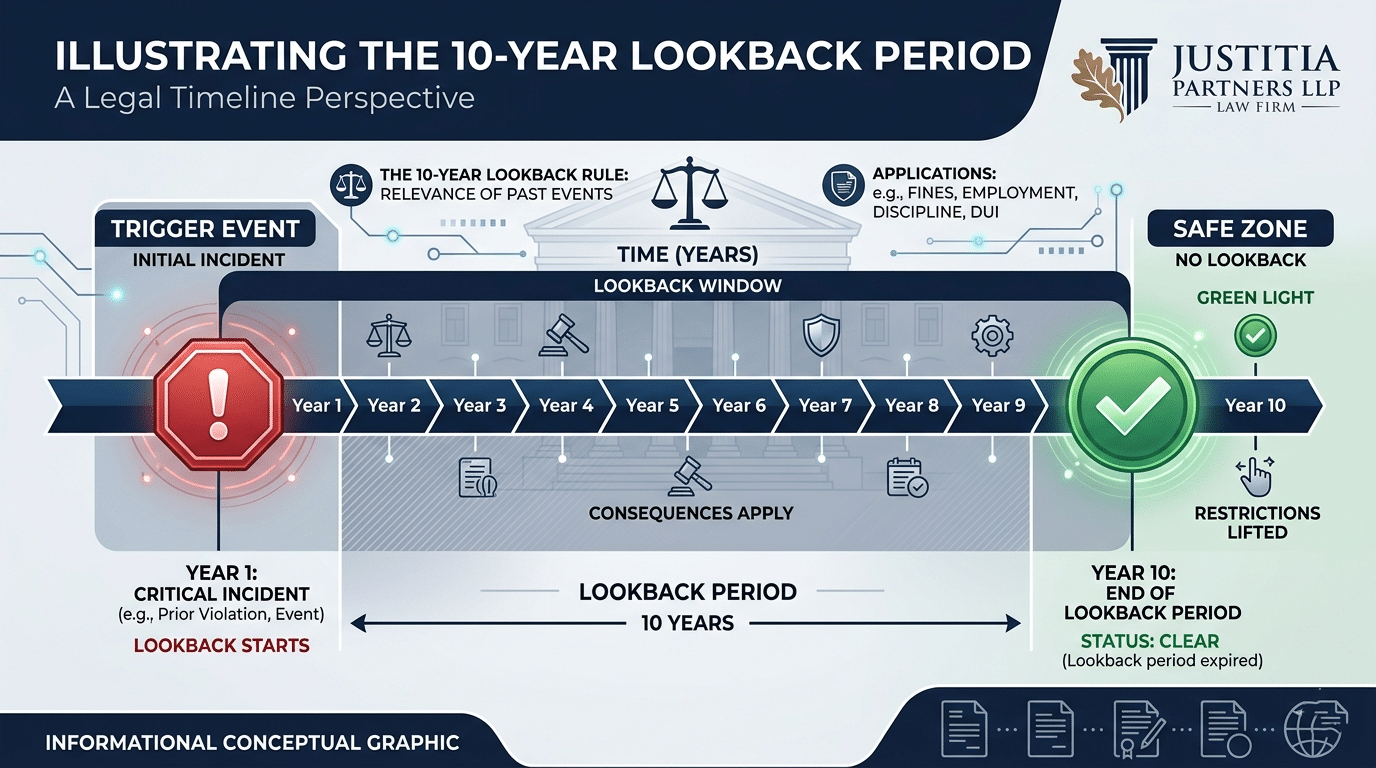
While a DWI stays on your record forever, Minnesota law places special emphasis on a specific timeframe known as the 10-year lookback period. This period is incredibly important for determining how subsequent offenses are charged.
If you receive a second DWI within ten years of your first conviction, the state treats you as a repeat offender. Your new charge is automatically enhanced to a Gross Misdemeanor. This enhancement drastically increases the penalties, carrying mandatory minimum jail sentences, higher fines, and longer license revocations. If you accumulate four DWIs within a ten-year period, the state will charge you with a Felony, which carries severe prison time.
Once ten years have passed since your last conviction or license revocation, your “clock” essentially resets for enhancement purposes. This means a subsequent DWI after eleven years might be treated as a first-time offense again. However, the original conviction still remains visible on your permanent record.
The Hidden Consequences of a Permanent DWI Record
A permanent criminal record is an anchor that weighs down your personal and professional life. Beyond the immediate fines and probation, you will face numerous long-term collateral consequences:
- Skyrocketing Insurance Premiums: Auto insurance companies check your driving record regularly. A DWI categorizes you as a high-risk driver, leading to massive premium increases that can last for three to five years, costing you thousands of dollars.
- Employment Difficulties: Nearly all modern employers run background checks. A criminal conviction, especially one involving alcohol and poor judgment, can automatically disqualify you from jobs involving driving, healthcare, education, or government clearances.
- Housing and Loans: Landlords often deny apartment applications from individuals with criminal records. Furthermore, certain professional loans or federal financial aid can be impacted.
- Travel Restrictions: Traveling internationally becomes complicated. For example, Canada has notoriously strict border control policies and will routinely deny entry to anyone with a DWI conviction, even if it happened decades ago.
Can You Expunge a DWI in Minnesota?
Fortunately, permanence is not always absolute. Under Minnesota’s “Second Chance Law,” you may be eligible to have your DWI criminal record sealed through a legal process called criminal expungement.
Expungement legally seals your criminal record from the public. If successful, you can legally answer “No” when an employer asks if you have a criminal conviction. However, securing an expungement requires you to meet strict eligibility requirements and endure a waiting period:
- Misdemeanor DWI: You must wait two years after successfully completing your probation, provided you commit no new crimes.
- Gross Misdemeanor DWI: You must wait four years after successfully completing your probation, provided you remain completely crime-free.
It is crucial to understand that while an expungement seals your criminal record, it does not erase your driving record. The Department of Public Safety will continue to show the alcohol-related license revocation on your driving history. Furthermore, law enforcement and the courts can still see your expunged record and will use it to enhance future DWI charges if you re-offend within the 10-year lookback period.
How to Keep a DWI Off Your Record in the First Place
The absolute best way to handle a permanent DWI record is to prevent it from happening in the first place. Expungement is a long, difficult process, and it is never guaranteed. This is why aggressive legal defense at the very beginning of your case is paramount.
An experienced defense attorney will heavily scrutinize the police report. If the officer lacked reasonable suspicion to pull you over, or if they improperly calibrated the breathalyzer machine, a lawyer can file a motion to suppress the evidence. This often leads to a complete dismissal of the charges. Alternatively, your lawyer might negotiate the DWI down to a lesser charge, such as Careless Driving, which does not carry the same harsh stigma.
Take Immediate Action to Protect Your Future

A DWI charge does not mean you are automatically guilty, nor does it guarantee a permanent criminal record. However, time is not on your side. You only have a few weeks to challenge your license revocation, and the prosecutor is already building their case against you.
At the Wolfgram Law Firm, our attorneys are relentless in their pursuit of justice for our clients. We understand the science of chemical testing and the strict procedures police must follow. We will fight aggressively to get your charges reduced or dismissed, protecting your clean record and your future opportunities. Contact us today for a free, strictly confidential consultation.
Frequently Asked Questions
Does a DWI ruin your life in Minnesota?
A DWI creates significant temporary hardship and long-term challenges, but it does not have to ruin your life. With a proactive approach, an aggressive defense attorney, and potentially an expungement later on, you can successfully move past the mistake and rebuild your life.
Can employers see an expunged DWI?
In most cases, no. A successful criminal expungement seals the record from public view, meaning standard employer background checks will come back clean. However, certain government agencies, law enforcement, and licensing boards (such as for nurses or teachers) may still have access to sealed records.
Does a DWI eventually drop off my driving record?
No. In Minnesota, an alcohol-related incident is a permanent fixture on your driving record maintained by the Department of Public Safety. While your insurance rates will eventually return to normal and the 10-year lookback period for criminal enhancement will expire, the actual entry on your driving record remains forever.
Our Reviews

Client
Testimonials
 Wolfgram Law Firm Criminal Defense

Canadian Pacific Plaza, 120 South 6th St Unit 2305, Minneapolis
-
Adam and his team here are outstanding and 100% will go the extra mile always staying in great communication.


Our Location
Canadian Pacific Plaza, 120 South 6th Street, Suite 2305, Minneapolis, Minnesota 55402, United States


Call Us
612-584-3675 Hours: 9am - 5pm | Monday - Friday