
Our Blog
What Evidence Is Used in Domestic Assault Cases?


If you are facing a domestic assault charge in Minnesota, you may feel like the case is based entirely on one person’s story. In reality, prosecutors often build their case from many types of evidence. Understanding what evidence may be used—and what weaknesses may exist—can help you make better decisions early.
At the Wolfgram Law Firm, our Minnesota domestic assault defense attorneys routinely review police reports, recordings, and witness statements in these cases. This guide explains the evidence commonly involved under Minnesota law, including how it may relate to what is considered domestic assault in Minnesota under Minn. Stat. § 609.2242.
Why Evidence Matters in a Domestic Assault Case
In a criminal case, the prosecution typically must prove each element of the charged offense beyond a reasonable doubt. In many domestic assault cases, that may include proving an assault act and proving the alleged victim qualifies as a family or household member under the statute.
Evidence does not always tell a complete story on its own. Recordings may be incomplete. Witness memories may change. Medical records may show injury without proving who caused it or whether contact was intentional. That is why a defense strategy often focuses on testing how strong each piece of evidence really is.
911 Calls and Dispatch Audio
In many domestic calls, the first evidence may come from a 911 recording or dispatch audio. These recordings can include:
- Statements made during the emergency call
- Background noise, screaming, or crying
- Information about weapons or injuries described in real time
- Officer dispatch details and response timing
Prosecutors may use 911 audio to support their theory of what happened. However, emergency calls can also be emotional, confusing, or incomplete. Depending on the facts, your attorney may challenge how the recording is interpreted or whether certain statements should be admissible.
Police Reports and Officer Observations
After officers arrive, they typically write a police report. This report may describe:
- Statements from the alleged victim, you, and other witnesses
- Visible injuries, redness, or property damage
- Whether anyone appeared intoxicated or highly emotional
- Whether an arrest was made and why
Police reports are often central to early charging decisions. Still, a report generally reflects what officers were told or observed at the scene—not necessarily the full history of the relationship or what happened before police arrived. In some cases, officers may not interview every witness or may document one person’s account more completely than another.
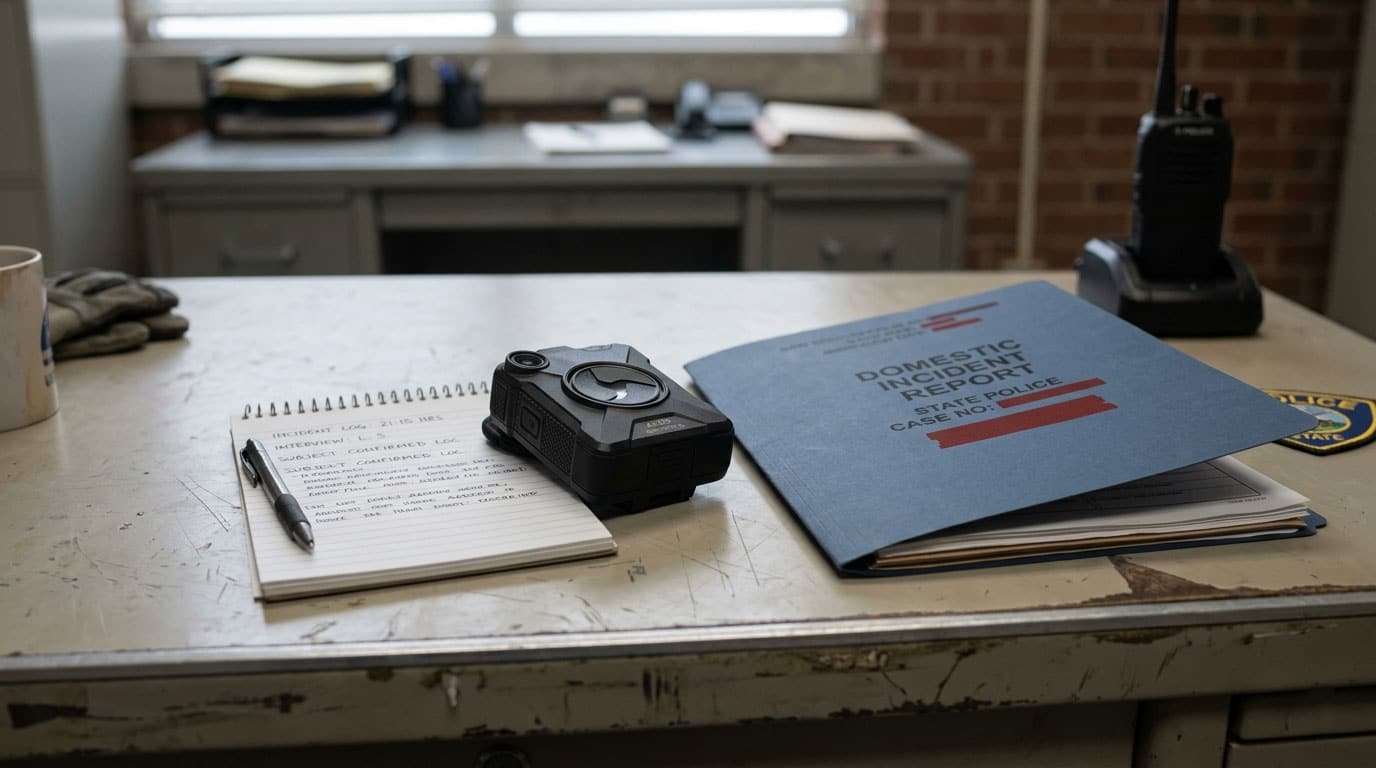
Body Camera and Dash Camera Footage
Many Minnesota law enforcement agencies use body-worn cameras or dash cameras. When available, this footage may show:
- Statements made at the scene
- Officer interactions with each person
- Visible injuries or lack of visible injury
- Whether someone appeared aggressive, calm, or injured
Video can be powerful for both sides. In some cases, footage may support the prosecution. In other cases, it may show inconsistent statements, limited injuries, or facts that do not match the written report. Your defense team may request this footage during discovery and review it carefully for context.
Photographs Taken at the Scene
Officers may take photographs of injuries, damaged property, or the layout of a home. These photos may be used to suggest physical contact or a struggle occurred.
However, photos alone may not answer key questions. They may not show when an injury happened, how it happened, or whether another explanation is possible. Depending on the case, your attorney may consult with experts or compare photos to medical records and witness accounts.
Medical Records and Hospital Documentation
If someone received medical care, records may include:
- Emergency room notes
- Descriptions of bruises, cuts, or pain
- Treatment provided and follow-up recommendations
- Statements made to medical staff
Medical documentation may help show that an injury exists. It does not always prove a crime occurred in the way the state alleges. For example, an injury might be consistent with an accident, self-inflicted harm, or a mutual struggle rather than intentional assault.
Witness Testimony
Witnesses may include neighbors, family members, children, friends, or bystanders. Their testimony may support either side depending on what they saw or heard.
In domestic cases, witness credibility can be especially important. People may be emotional, biased, or afraid. Some witnesses may only hear part of an argument. Others may repeat secondhand information rather than direct observation. A skilled defense attorney may cross-examine witnesses to highlight inconsistencies or limited personal knowledge.
Statements From the Alleged Victim
The alleged victim’s statements may appear in police reports, 911 calls, medical records, or later interviews. In some cases, the alleged victim may later change their account or may not want the case to proceed. As discussed in our post on whether domestic violence charges can be dropped, the prosecutor—not the alleged victim—typically controls charging decisions, so the case may continue even if a witness becomes reluctant to testify.
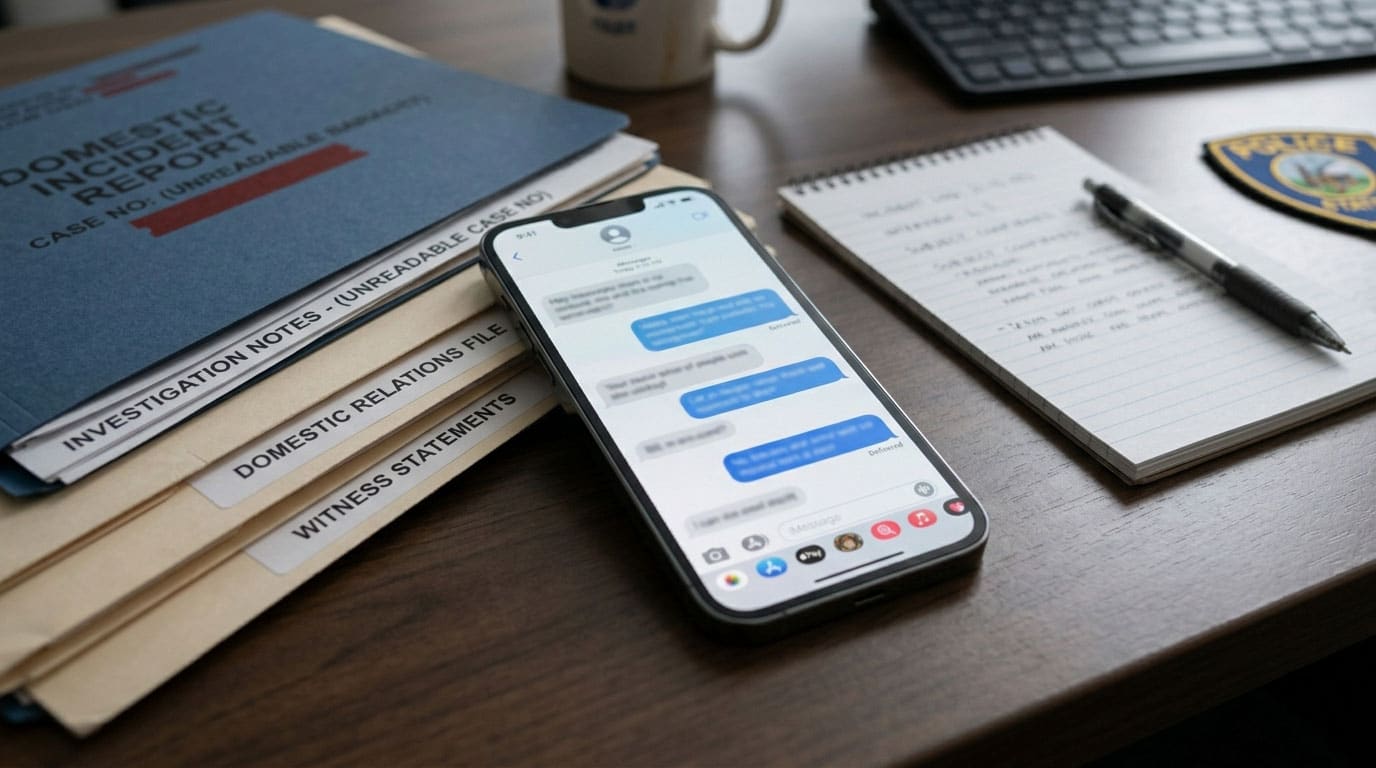
Text Messages, Social Media, and Digital Evidence
Prosecutors may also review digital evidence, such as:
- Text messages or messaging app conversations
- Social media posts or comments
- Location data or phone logs, when lawfully obtained
- Photos or videos stored on a phone
Digital evidence can be helpful or harmful depending on context. A single angry message may look bad out of context, while a longer message thread may show a different pattern. Your attorney may challenge how digital evidence was collected, whether a search was lawful, and whether the messages actually support the charged conduct.
Evidence Related to Prior Domestic Incidents
In some cases, the state may try to introduce evidence of prior incidents, prior calls to police, or prior court orders. This type of evidence may be limited by court rules, but it can still affect how a case feels to a judge or jury.
Prior history does not automatically prove the current charge. However, prosecutors may argue it shows a pattern. Your defense may need to respond carefully and may file motions to limit unfair prejudice when appropriate under Minnesota evidence rules.
How a Defense Attorney May Challenge the Evidence
At Wolfgram Law Firm, we do not assume the state’s evidence is complete or accurate. Depending on the facts, a defense strategy may include:
- Requesting full discovery, including 911 audio, body camera footage, and dispatch logs
- Comparing witness statements for inconsistencies
- Investigating whether evidence was obtained lawfully
- Filing motions to suppress evidence when constitutional issues may exist
- Preparing cross-examination that focuses on what witnesses actually know
In some cases, weaknesses in the evidence may support a dismissal, a plea to a lesser offense, or a stronger position at trial. Outcomes depend on the specific facts and how the law applies to your situation.
What You Should Do If You Are Accused
If you are under investigation or have been charged, you may want to act carefully. Depending on the case, it may help to:
- Avoid discussing the incident on social media or in text messages
- Follow all no-contact orders or release conditions
- Preserve helpful evidence, such as messages, call logs, or witness contact information
- Speak with a criminal defense attorney before making statements to law enforcement
Early legal guidance may help you understand what evidence the state appears to rely on and what options may be available. You can learn more about our team on our attorneys and staff page and read client reviews.
Contact Wolfgram Law Firm for a free consultation. Call (612) 584-3675 or use our online contact form. We can review your case and explain the next steps in plain language.
This article is for general informational purposes only and does not constitute legal advice. Every case is different. Consult a licensed Minnesota criminal defense attorney about your specific situation.
Frequently Asked Questions
What evidence is commonly used in Minnesota domestic assault cases?
Cases may involve 911 recordings, police reports, body camera footage, photographs, medical records, witness testimony, and digital evidence such as text messages. The exact evidence depends on what was collected in your case.
Can I be convicted based only on the alleged victim’s word?
Sometimes prosecutors move forward with limited evidence, but the state still must meet its burden of proof. Depending on the facts, a case based mainly on one person’s account may be challenged through cross-examination, inconsistent statements, or lack of supporting evidence.
Are 911 calls always admissible in court?
Not necessarily. Admissibility may depend on legal rules, how the call was made, and what statements are offered. Your attorney may argue that certain portions should be excluded or interpreted carefully.
Can text messages be used against me in a domestic assault case?
They may be, if lawfully obtained and relevant. However, message context, timing, and collection methods can matter. A defense attorney may challenge whether texts actually prove the charged conduct.
Does body camera footage always help the prosecution?
No. Footage may help either side. In some cases, video may show limited injuries, calm behavior, or statements that differ from the written police report.
How can a lawyer challenge domestic assault evidence?
Depending on the case, an attorney may request discovery, file suppression motions, cross-examine witnesses, compare reports to recordings, and present alternative explanations supported by the facts.
Our Reviews

Client
Testimonials
 Wolfgram Law Firm Criminal Defense

Canadian Pacific Plaza, 120 South 6th St Unit 2305, Minneapolis
-
Adam and his team here are outstanding and 100% will go the extra mile always staying in great communication.


Our Location
Canadian Pacific Plaza, 120 South 6th Street, Suite 2305, Minneapolis, Minnesota 55402, United States


Call Us
612-584-3675 Hours: 9am - 5pm | Monday - Friday