
Our Blog
What Is an Ignition Interlock Device in Minnesota?

For many Minnesota drivers, losing their driving privileges is the single most devastating consequence of a drunk driving arrest. Without a license, commuting to work, picking up children from school, and maintaining a normal life become incredibly difficult. However, the state offers a pathway to keep you on the road: the Ignition Interlock Device program. If you are asking, “what is an ignition interlock device in Minnesota?,” you are likely facing a license revocation and weighing your options.
At the Wolfgram Law Firm, our criminal defense attorneys guide clients through the complex web of DWI penalties and license reinstatement procedures every day. While an Ignition Interlock Device (IID) allows you to regain your independence, it comes with strict rules, significant costs, and zero tolerance for mistakes. Below, we provide a comprehensive overview of how the device works, who is required to use it, and what happens if you violate the program rules.
How Does an Ignition Interlock Device Work?
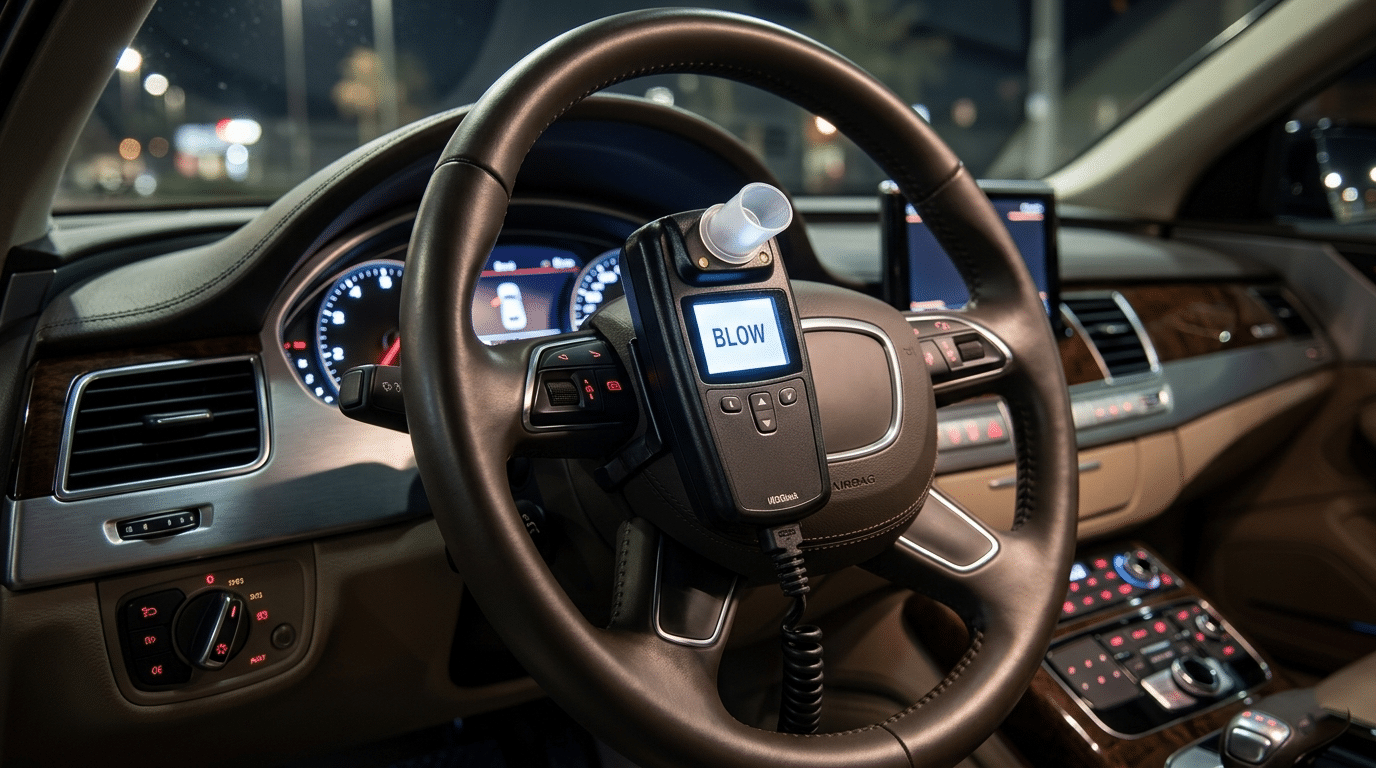
An Ignition Interlock Device is essentially an advanced, highly calibrated mini-breathalyzer that is hardwired directly into your vehicle’s ignition system. Before the engine will turn over, the driver must blow into the mouthpiece of the device to provide a breath sample.
The device analyzes the sample for any trace of alcohol. In Minnesota, the machine is typically set with a fail-point of 0.02 Blood Alcohol Concentration (BAC). If your breath registers at or above this incredibly low threshold, the device prevents the vehicle from starting. It also logs the failure, which is transmitted to the Minnesota Department of Public Safety (DPS).
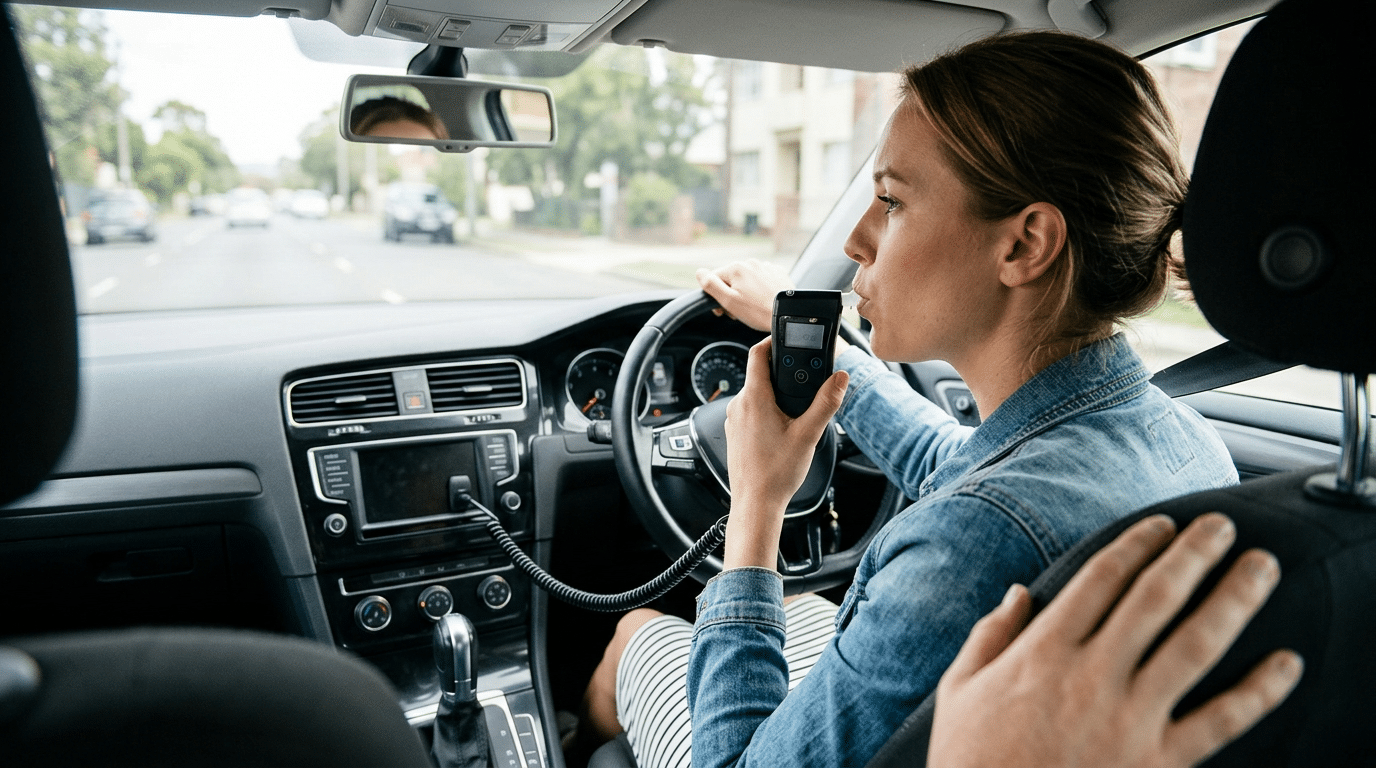
To prevent a sober friend from starting the car for an intoxicated driver, the IID requires “rolling retests.” While you are driving, the device will randomly prompt you to provide another breath sample. If you fail a rolling retest, or if you ignore the prompt, the device will not abruptly shut off the engine (as this would be highly dangerous in traffic). Instead, it logs the violation and triggers an alarm—usually flashing the headlights and honking the horn continuously—until you pull over and turn off the engine.
Who Is Required to Install an IID in Minnesota?
Not every DWI offender is forced to install an Ignition Interlock Device, but for many, it is the only way to drive legally. Minnesota law categorizes drivers based on the severity and frequency of their offenses:
First-Time Offenders (Under 0.16 BAC)
If you are arrested for a standard first-time DWI with a BAC under 0.16, you generally face a 90-day license revocation. You are not strictly required to install an IID. Instead, you have a choice: you can either sit out the revocation period (often with 15 days of no driving, followed by a limited work permit), OR you can opt into the IID program to receive full driving privileges immediately. For many, the cost of the IID is worth the freedom to drive anywhere, anytime.
High-BAC and Repeat Offenders (Mandatory IID)
The rules change drastically if your case involves “aggravating factors.” Installation of an Ignition Interlock Device is mandatory if you want to drive during your revocation period under the following circumstances:
- High BAC: Your chemical test revealed a BAC of 0.16 or higher (exactly double the legal limit). This typically requires 1 year on the IID.
- Test Refusal: You refused to submit to the official breath, blood, or urine test at the police station.
- Prior Offenses: You have a prior DWI conviction or license revocation on your record within the last ten years. Repeat offenders may be required to keep the device installed for 2 to 6 years, depending on their history.
- B-Card Restrictions: Individuals whose licenses are restricted as “inimical to public safety” must use the IID to regain any driving privileges.
The Hidden Costs of the IID Program
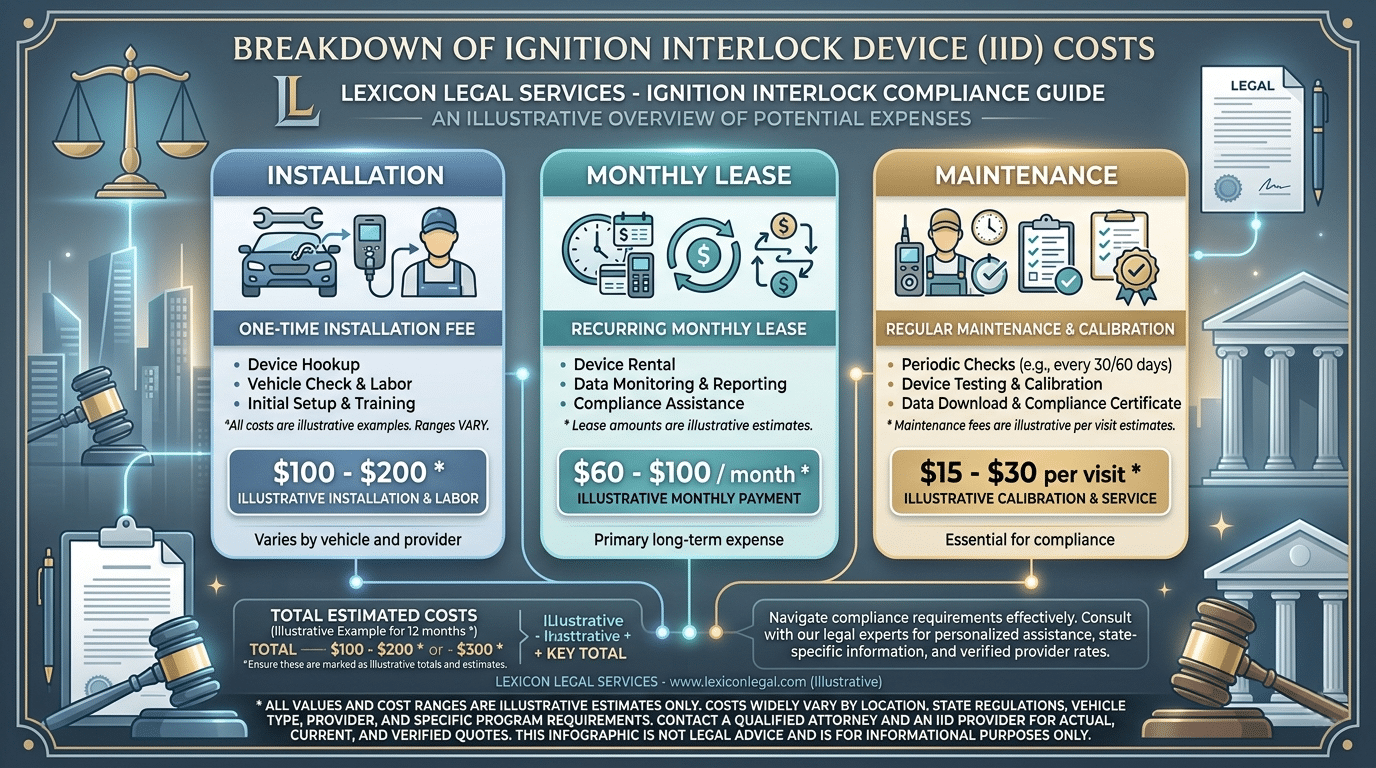
Regaining your freedom is not cheap. The state does not provide the device; you must lease it from an approved third-party vendor (such as Intoxalock or LifeSafer). The costs add up quickly:
- Installation Fee: Typically ranges from $75 to $150, depending on the complexity of your vehicle’s wiring.
- Monthly Lease Fee: Expect to pay between $70 and $120 every single month the device is installed.
- Maintenance and Calibration: You must bring the vehicle to an authorized service center every 30 to 60 days to download the data logs and recalibrate the machine. This often carries an additional fee.
- Driver’s License Reinstatement Fee: The state of Minnesota currently charges approximately $680 to reinstate a revoked license.
If your household income falls below a certain threshold, Minnesota does offer financial assistance for the IID program, which can help cover the installation and monthly leasing costs.
Program Rules and Common Violations
The DPS monitors IID data logs very closely. Violating the rules will result in the extension of your required IID period, or worse, the total cancellation of your driving privileges.
Attempting to bypass the device, tampering with the wiring, or having someone else blow into the machine are serious violations. Furthermore, you must be incredibly careful about what you consume. Products containing hidden alcohol—such as certain mouthwashes, cough syrups, energy drinks, and even fermented foods or spicy foods—can trigger a “false positive” reading. If you blow a false positive, you must rinse your mouth with water and immediately pass a retest to prove you are not intoxicated.
Why You Need a Criminal Defense Attorney First
Before you rush to install an Ignition Interlock Device, it is vital to consult with a defense attorney. In Minnesota, the revocation of your driver’s license (an Implied Consent violation) happens automatically, before you ever step foot in a criminal courtroom.
You only have a strict 60-day window to legally challenge this license revocation. A skilled attorney can file a petition to challenge the police officer’s probable cause for the traffic stop or the accuracy of the chemical test. If your attorney wins this hearing, your license revocation is thrown out, and you will not have to install an IID or pay the reinstatement fees.
Take Immediate Action to Protect Your Future

Dealing with a DWI and the complexities of the Ignition Interlock program can feel overwhelming. You do not have to navigate this bureaucratic nightmare alone. At the Wolfgram Law Firm, our attorneys are dedicated to protecting your rights, your record, and your ability to drive. We will aggressively review the evidence against you and fight to keep an IID off your steering wheel.
Time is critical. Contact us today for a free, confidential consultation so we can begin building your defense and protecting your driving privileges.
Frequently Asked Questions
Can someone else drive my car if it has an Ignition Interlock Device?
Yes, other people can legally drive your vehicle. However, they must use the IID exactly as you would, including providing initial breath samples and passing all rolling retests. Crucially, you are held strictly responsible for any alcohol detected on the device, regardless of who was driving. It is highly recommended that you keep a detailed log of who drives your car and when.
How much does an ignition interlock device cost in MN?
The total cost varies by vendor, but you should expect to pay roughly $75 to $150 for the initial installation, plus a monthly leasing and maintenance fee of $70 to $120. Over a one-year period, the device alone will easily cost over $1,000, not including state reinstatement fees.
Can I install an IID on a motorcycle or commercial vehicle?
No. Minnesota law does not permit the installation of an Ignition Interlock Device on motorcycles or commercial motor vehicles (CMVs). If you require an IID to drive, you will only be legally allowed to operate standard passenger vehicles equipped with the device.
Our Reviews

Client
Testimonials
 Wolfgram Law Firm Criminal Defense

Canadian Pacific Plaza, 120 South 6th St Unit 2305, Minneapolis
-
Adam and his team here are outstanding and 100% will go the extra mile always staying in great communication.


Our Location
Canadian Pacific Plaza, 120 South 6th Street, Suite 2305, Minneapolis, Minnesota 55402, United States


Call Us
612-584-3675 Hours: 9am - 5pm | Monday - Friday