
Our Blog
What Happens If You Fail a Breath Test?
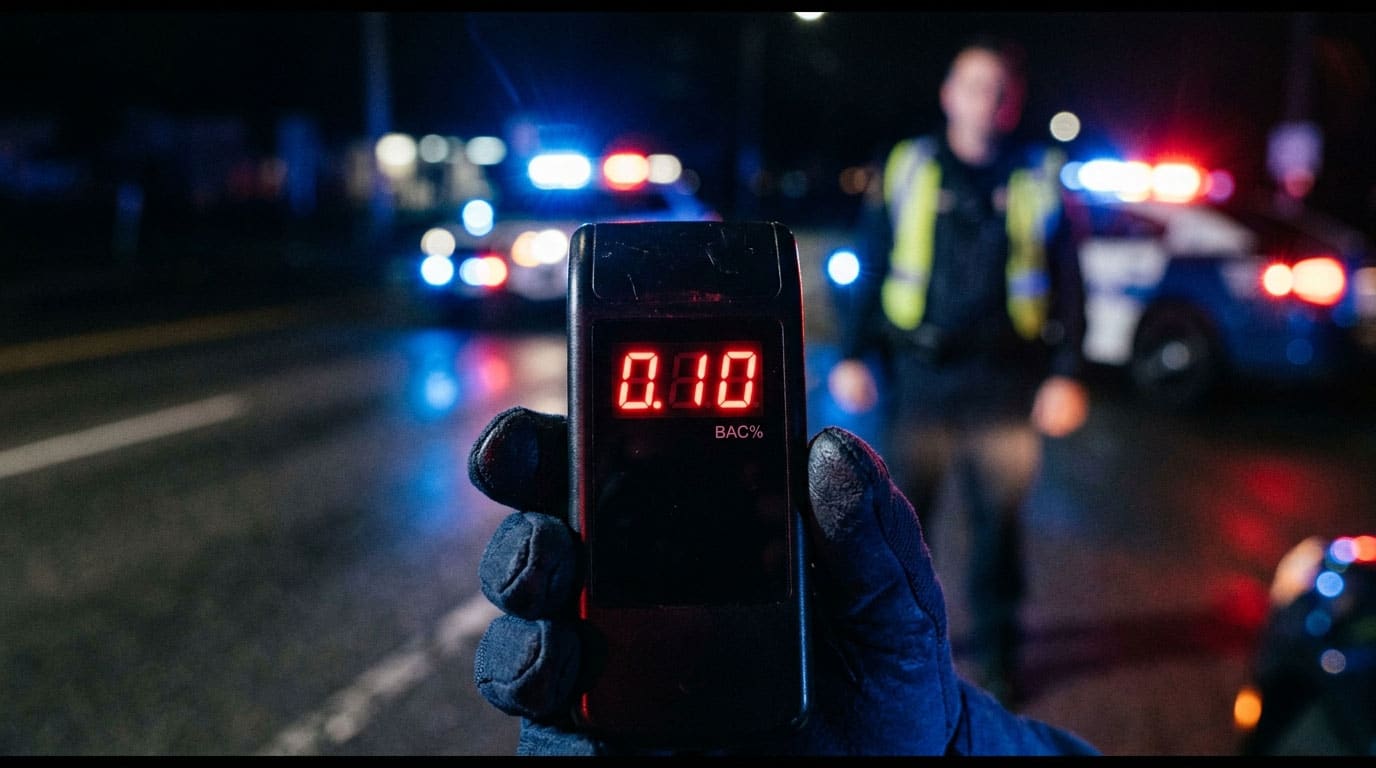

Seeing the red numbers light up on a breathalyzer machine creates a truly sinking feeling. You blew over the legal limit, and now you face serious criminal charges. At this moment, many drivers panic and assume their life is ruined. Therefore, you might desperately wonder exactly what happens if you fail a breath test in Minnesota.
The aftermath of a failed test moves incredibly fast. You were likely already arrested based on roadside evidence. Then, the state will immediately target your driving privileges. However, failing a chemical test does not automatically mean you will suffer a criminal conviction. At the Wolfgram Law Firm, our criminal defense attorneys fight these exact cases every single day. Consequently, we understand exactly how to protect your rights, challenge the evidence, and guide you through this frightening process.
Immediate Consequences at the Police Station
You are typically already under arrest when you take the official evidentiary breath test at the station. After failing this test, the officers will proceed to officially book you into the county jail. During this booking process, they take your fingerprints and photograph your face for a mugshot. After that, you must wait in a holding cell until a judge sets your bail or authorizes your release.
Furthermore, the police will likely tow and impound your vehicle. In severe cases—such as a repeat DWI, a felony DWI, or aggravated cases—the state could even attempt to permanently forfeit your car. Meanwhile, the police will hand you a Notice and Order of Revocation. This document signifies the impending loss of your driver’s license.
The Two-Front Battle: Criminal vs. Civil Penalties
In Minnesota, a failed breath test forces you to fight two completely separate legal battles simultaneously. Specifically, you face a criminal case and a civil case.
On one hand, the state prosecutes you in criminal court for driving while impaired. This criminal case determines your potential jail time, expensive fines, and your permanent criminal record. On the other hand, the Department of Public Safety pursues a civil case against you. This civil case, known as Implied Consent, strictly handles the revocation of your driver’s license. As a result, you need a defense strategy that effectively tackles both of these distinct cases.
Short-Term Penalties: Immediate License Revocation
When the police issue your Notice and Order of Revocation, this paper typically serves as a 7-day temporary driving permit. Your actual license revocation begins after those 7 days expire. For a standard first-time offense, you typically lose your driving privileges for 90 days.
However, you have options to keep driving. Once the revocation starts, you must serve a 15-day “hard revocation” period (no driving at all) before you can apply for a limited work permit. Alternatively, you can enroll in the Ignition Interlock program immediately. If you choose Interlock, you can drive anywhere, but you must pay significant fees and blow into a machine to start your car.
Long-Term Consequences: Fines, Jail, and Your Record
The long-term criminal penalties depend heavily on exactly how high you blew on the breath test. If you blew between 0.08 and 0.15, the state charges you with a Fourth-Degree DWI. This misdemeanor charge carries a maximum penalty of 90 days in jail and a $1,000 fine. Fortunately, judges rarely send first-time offenders to actual jail.
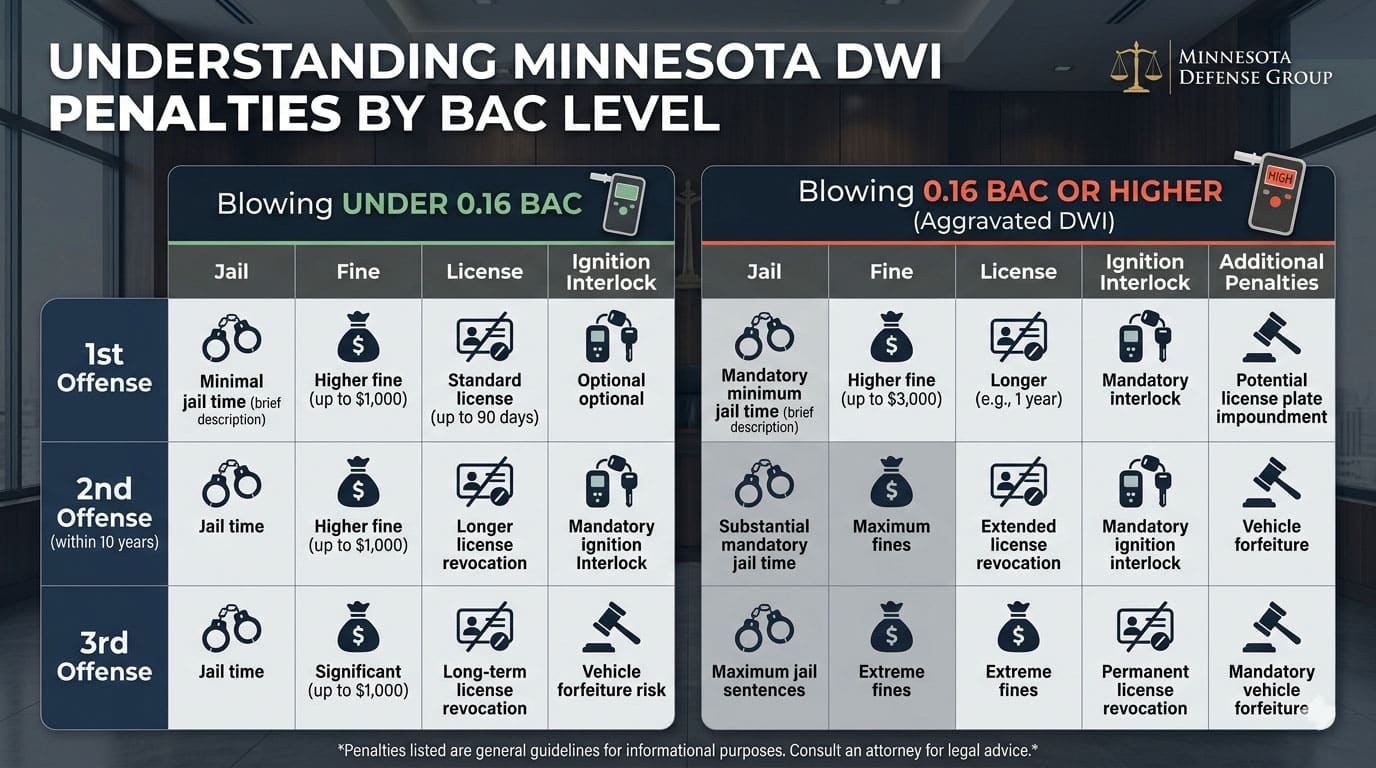
Conversely, if you blew a 0.16 or higher, the situation becomes much worse. The law considers a BAC that high an “aggravating factor.” Consequently, the prosecutor will elevate your charge to a Gross Misdemeanor. This serious charge exposes you to a maximum of one year in jail and a massive $3,000 fine. In addition, the state will automatically mandate the use of an Ignition Interlock device for a full year.
Can Your Lawyer Challenge a Failed Breath Test?
Many people mistakenly believe that a failed breath test guarantees a criminal conviction. However, this assumption is completely false. Breathalyzer machines are essentially small computers, and computers make mistakes. Therefore, an experienced attorney can aggressively challenge the accuracy of the chemical test.
Minnesota police primarily use a machine called the DataMaster DMT. The police must properly calibrate and maintain this specific machine. If the police fail to calibrate the machine on schedule, we can ask the judge to throw the results out completely. Furthermore, the arresting officer must observe you continuously for 15 minutes before you blow. If the officer looks away, leaves the room, or lets you burp, they violate the testing protocol. This violation can ruin their entire case against you.
In addition, certain medical conditions can trigger false positive results. For example, if you suffer from acid reflux (GERD), stomach vapor can travel into your mouth and trick the machine. Dental work, such as braces or bridges, can also trap mouth alcohol and artificially inflate your score.
Why You Must Act Quickly

Time is your absolute worst enemy after a DWI arrest. As mentioned earlier, the state revokes your license immediately. You only get a strict 60-day window to file a formal petition to fight this civil license revocation. If you miss this 60-day deadline, you lose your right to challenge the revocation forever.
Therefore, you must contact a defense lawyer right away. At the Wolfgram Law Firm, we jump into action immediately. We scrutinize the police reports, analyze the breathalyzer calibration logs, and build a customized defense strategy to protect your freedom. Please contact us today for a free consultation so we can start fighting your charges.
Frequently Asked Questions
What happens if I blow exactly 0.08 on the machine?
The law strictly defines the limit as 0.08 or more. Therefore, if you blow exactly 0.08, you still fail the test. The police will arrest you, and the prosecutor will aggressively file criminal charges against you.
Is a failed breath test a guaranteed conviction?
No, a failed test definitely does not guarantee a conviction. Defense lawyers constantly challenge breathalyzer results. If we prove the police administered the test incorrectly, the judge will suppress the evidence and dismiss the case.
Does a breathalyzer printout prove I was drunk?
The printout only shows the machine’s estimation of your BAC at that exact moment. It does not definitively prove impairment, and it does not guarantee the machine worked perfectly. We force the prosecutor to prove the machine was accurate beyond a reasonable doubt.
Our Reviews

Client
Testimonials
 Wolfgram Law Firm Criminal Defense

Canadian Pacific Plaza, 120 South 6th St Unit 2305, Minneapolis
-
Adam and his team here are outstanding and 100% will go the extra mile always staying in great communication.


Our Location
Canadian Pacific Plaza, 120 South 6th Street, Suite 2305, Minneapolis, Minnesota 55402, United States


Call Us
612-584-3675 Hours: 9am - 5pm | Monday - Friday