
Our Blog
What Happens If You Are Caught With Drugs in Your Car?
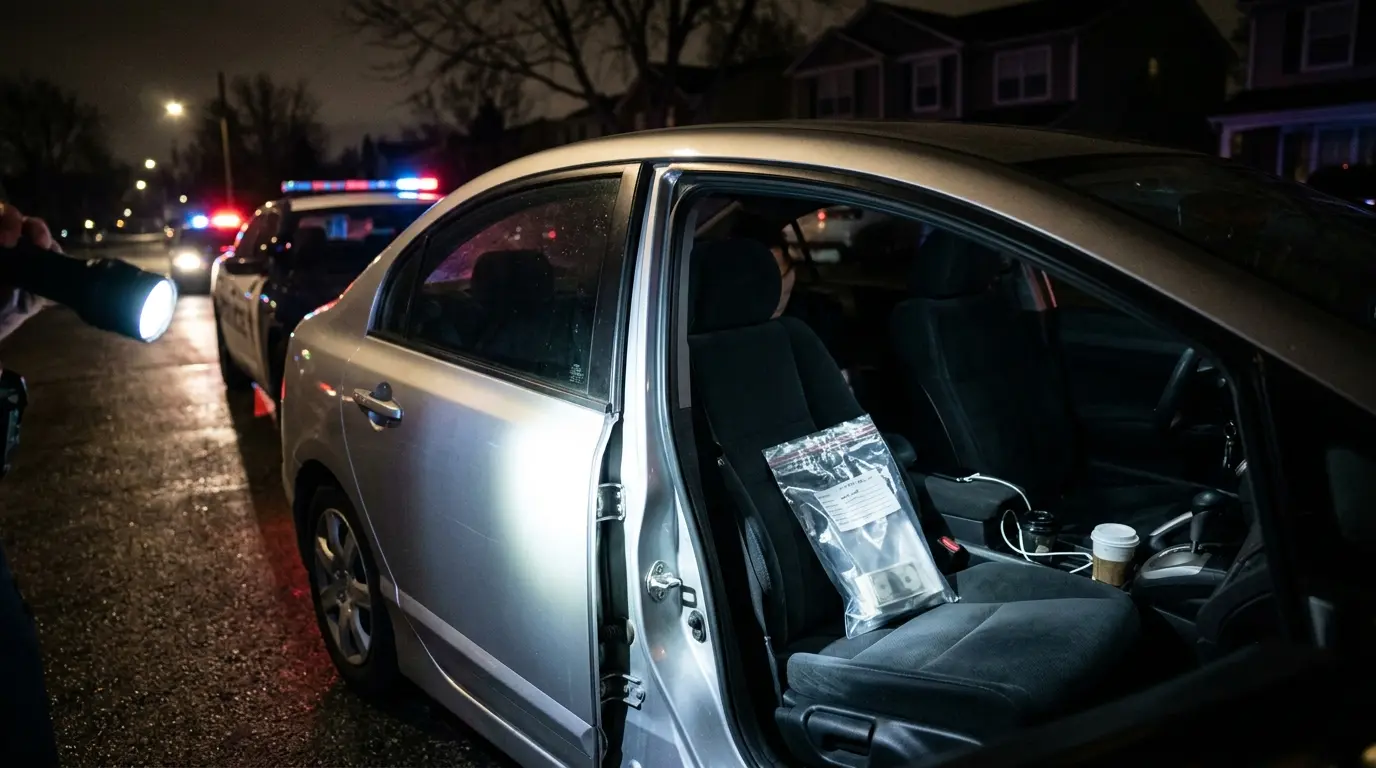

Being caught with drugs in car Minnesota traffic stops may lead to arrest even when the substances belong to someone else. Officers may search your vehicle with consent, a warrant, or certain legal exceptions. You may face constructive possession charges based on proximity alone.
Vehicle drug cases raise unique Fourth Amendment issues. Furthermore, police may begin civil forfeiture proceedings to seize your car.
At the Wolfgram Law Firm, our drug crimes defense attorneys defend drivers and passengers in drugs in car Minnesota cases daily. This guide explains what happens and how to respond.
Drugs in Car Minnesota: How Traffic Stops Start
Most drugs in car Minnesota cases begin with a traffic stop for speeding, expired plates, broken taillights, or equipment violations. Officers may extend the stop if they develop reasonable suspicion of criminal activity.
Claims of smelling marijuana, nervous behavior, or inconsistent answers may lead officers to ask for consent to search the vehicle. You may refuse consent in many situations.
However, officers may still search under other exceptions — including arrest circumstances, plain view discoveries, or valid warrants.
When Can Police Search Your Vehicle?

The Fourth Amendment limits vehicle searches in drugs in car Minnesota stops. Common legal bases for searches include the following.
- Voluntary consent from the driver or person with authority over the car
- Search incident to a lawful arrest of an occupant
- Probable cause to believe the vehicle contains evidence of crime
- Inventory search after lawful impoundment
- A valid search warrant
Illegal searches may violate your rights under Minnesota drug laws. Your attorney may file a motion to suppress evidence from unconstitutional searches.
Constructive Possession in Vehicle Cases
Drugs found under a seat, in the glove box, or in a center console may support possession charges against the driver. Passengers may also face charges when drugs are within reach.
Prosecutors must prove you knew about and controlled the drugs — not just that you were nearby. Shared rides, borrowed cars, and rental vehicles create common defense scenarios.
Your attorney may argue another occupant owned the drugs or that you had no knowledge of their presence.
Driver vs. Passenger Responsibility
Drivers are not automatically guilty when drugs in car Minnesota officers discover belong to a passenger. However, prosecutors often charge everyone present and sort out responsibility later.
Passengers may face equal exposure if evidence links them to the drugs — texts, fingerprints, admissions, or ownership of packaging.
Therefore, all occupants should remain silent and request attorneys separately. One person’s statement may implicate others.
Charge Levels When Drugs Are in a Car

Charge severity depends on drug type, lab-confirmed weight, and evidence of sale. Vehicle searches that uncover scales, baggies, and cash may support distribution charges.
Aggravating factors — such as drugs near a school or park — may enhance degrees when the stop occurred in designated zones.
Lab results — not officer field tests — typically determine the final charge level in drugs in car Minnesota prosecutions.
Vehicle Forfeiture in Drug Cases
Minnesota civil forfeiture law under Statute 609.531 may allow police to seize vehicles used in drug crimes. Forfeiture may proceed even while criminal charges are pending.
You may challenge forfeiture through a separate civil process with its own deadlines. Missing deadlines may result in permanent loss of the vehicle.
An attorney may connect criminal defense strategy with forfeiture challenges to protect your property rights.
What to Do During and After the Stop
Your conduct during a drugs in car Minnesota stop may shape your entire case. Follow these guidelines to protect your rights.
Stay calm and keep hands visible. Sudden movements escalate stops and create safety concerns for officers.
Provide license, registration, and insurance. You must identify yourself but need not answer questions about drugs or travel plans.
Clearly refuse consent to search if you do not agree. Say: “I do not consent to a search.”
Do not explain who owns the drugs. Any statement may become evidence against you or others.
Defense Strategies for Car Drug Cases
Effective defenses in drugs in car Minnesota cases often combine constitutional challenges with factual disputes.
Suppression motions may exclude drugs found through illegal searches. Without evidence, charges may dismiss.
Ownership defenses may show the drugs belonged to another occupant. Timeline and witness testimony may support your version of events.
Lab challenges may reveal the substance was not illegal or weight was below charging thresholds.
Get Help After Drugs Are Found in Your Car

Drugs in car Minnesota cases move quickly from traffic stop to criminal charges. Early attorney involvement may preserve suppression issues and challenge forfeiture.
At Wolfgram Law Firm, we defend drivers and passengers in vehicle drug cases across the Twin Cities. Contact us today for a free and confidential consultation.
Our Minnesota criminal defense team handles drugs in car Minnesota cases in Hennepin, Ramsey, and Dakota counties.
Frequently Asked Questions
Can police search my car if I refuse consent in Minnesota?
Yes — in some situations. Refusal does not always stop a search if officers have probable cause, a warrant, or another valid exception.
However, refusing consent preserves your ability to challenge illegal searches later in drugs in car Minnesota cases.
Am I guilty if drugs were found in my car but were not mine?
Not automatically. Prosecutors must prove you knowingly possessed the drugs through direct or constructive possession evidence.
Borrowed cars, rideshares, and passenger ownership are common defenses when drugs in car Minnesota officers find belong to someone else.
Can the police take my car after finding drugs?
Police may seize your vehicle through civil forfeiture proceedings in drug cases. You may challenge forfeiture, but strict deadlines apply.
Contact an attorney immediately if your car was impounded during a drugs in car Minnesota arrest.
This article is provided for informational purposes only and does not constitute legal advice. Every criminal case is unique. If you need legal advice regarding your specific situation, consult our experienced Minnesota criminal defense attorney.
Our Reviews

Client
Testimonials
 Wolfgram Law Firm Criminal Defense

Canadian Pacific Plaza, 120 South 6th St Unit 2305, Minneapolis
-
Adam and his team here are outstanding and 100% will go the extra mile always staying in great communication.


Our Location
Canadian Pacific Plaza, 120 South 6th Street, Suite 2305, Minneapolis, Minnesota 55402, United States


Call Us
612-584-3675 Hours: 9am - 5pm | Monday - Friday