
Our Blog
What Happens During a Criminal Trial in Minnesota?
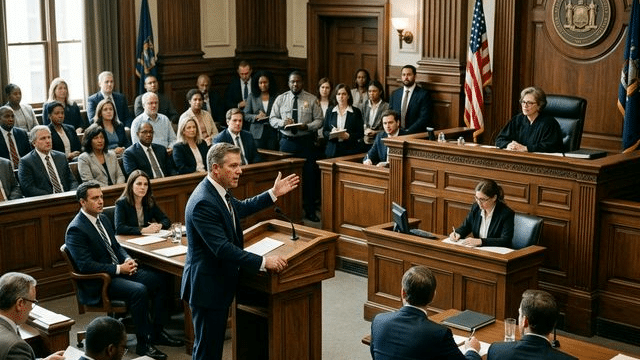

If plea negotiations have failed and the prosecutor refuses to dismiss the charges against you, your case is headed to trial. For most people, the prospect of sitting in a courtroom, judging the faces of a jury, and fighting the state for their freedom is terrifying. The anxiety largely stems from a fear of the unknown. To regain control of your situation, you need to understand exactly what happens during a criminal trial in Minnesota.
Television and movies often portray trials as chaotic shouting matches filled with surprise witnesses. In reality, a criminal trial is a highly structured, procedural battle. Below, the litigation team at the Wolfgram Law Firm breaks down the anatomy of a Minnesota criminal trial, stage by stage, so you know exactly what to expect when you walk into the courtroom.
Phase 1: Jury Selection (Voir Dire)
Depending on the severity of your charge, your fate will be decided by either a six-person jury (for misdemeanors and gross misdemeanors) or a twelve-person jury (for felonies). But before the trial officially begins, those jurors must be chosen. This process is called Voir Dire.
During Voir Dire, the judge, the prosecutor, and your criminal defense lawyer will ask questions to a large pool of potential jurors. The goal for your defense attorney is not to find a jury that is necessarily “on your side”–rather, it is to weed out jurors who have hidden biases. If a potential juror has a close relative in law enforcement or was previously a victim of a similar crime, your attorney will strike them from the panel to ensure you receive a fair, impartial hearing.
Phase 2: Opening Statements
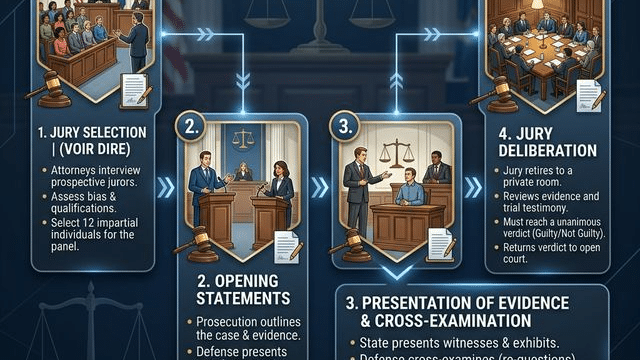
Once the jury is sworn in, the trial begins with Opening Statements. Because the state carries the burden of proving your guilt “beyond a reasonable doubt,” the prosecuting attorney goes first.
The prosecutor will tell the jury what they believe the evidence will show, painting a picture of you committing the crime. Afterward, your defense attorney gets their turn. A powerful defense opening statement is critical here; it immediately pokes holes in the state’s narrative, tells your side of the story, and prepares the jury to view the upcoming evidence with extreme skepticism.
Phase 3: The Prosecution’s Case and Direct Examination
The state must present its evidence first. The prosecutor will call witnesses to the stand–such as arresting officers, forensic experts, or alleged victims–and ask them questions to build their case against you. This is known as Direct Examination.
The prosecutor will also introduce physical exhibits during this phase, such as photographs of the scene, DNA reports, or alleged narcotics found during a search.
Phase 4: Cross-Examination (The Defense Attacks)
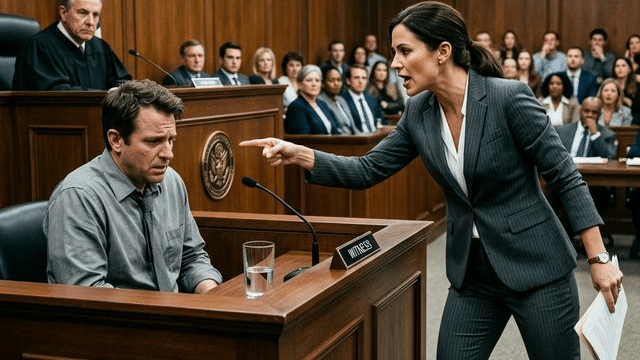
This is where an elite defense attorney earns their reputation. After the prosecutor finishes questioning a witness, your lawyer has the absolute right to conduct a Cross-Examination.
Cross-examination is the most powerful tool in the courtroom. Your attorney will aggressively question the state’s witnesses to expose inconsistencies, lies, hidden motives, and poor memories. If a police officer claims they clearly saw you commit a crime at midnight, your attorney will relentlessly question their line of sight, the lighting conditions, and their distance from the event to introduce reasonable doubt into the minds of the jury.
Phase 5: The Defense’s Case (Do You Have to Testify?)
After the state “rests” its case, the defense has the opportunity to present its own witnesses and evidence. You are completely protected by the Fifth Amendment of the U.S. Constitution, which means you never have to testify at your own trial.
If you choose to remain silent, the judge will explicitly instruct the jury that they cannot use your silence against you. The decision to testify is highly strategic. Sometimes, putting a client on the stand to tell their truth is necessary (especially in self-defense cases); other times, it is a dangerous trap that opens you up to aggressive cross-examination by the prosecutor. You and your attorney will make this crucial decision together.
Phase 6: Closing Arguments
Once all evidence has been presented, both sides deliver their Closing Arguments. This is the final pitch to the jury. The prosecutor will summarize their evidence and demand a guilty verdict. Your defense attorney will summarize why the state failed to meet its heavy burden of proof, highlighting every inconsistency, missing piece of evidence, and logical flaw in the state’s timeline.
Phase 7: Jury Deliberation and the Verdict
Following closing arguments, the judge will read the official jury instructions, which explain the specific laws the jury must follow. The jury will then be escorted into a private room to deliberate.
In Minnesota criminal trials, a jury verdict must be unanimous. All six or twelve jurors must completely agree on either “Guilty” or “Not Guilty.” If the jury deliberates for days and absolutely cannot agree, the judge may declare a mistrial (often called a “hung jury”), forcing the state to decide whether to drop the charges, offer an incredibly favorable plea deal, or start the entire process over again.
Why You Need a Trial-Tested Attorney
Many lawyers advertise as “criminal defense attorneys” but spend their entire careers pleading clients guilty because they are terrified of stepping inside a courtroom. When your freedom is on the line, you cannot afford a lawyer who is afraid of a fight.
At the Wolfgram Law Firm, we are trial lawyers. Prosecutors know our reputation, and they know we will take a case to a jury and aggressively dismantle their witnesses. This reputation for going the distance is exactly what secures favorable outcomes for our clients, both inside the courtroom and at the negotiation table. If you are facing criminal charges in Minnesota, contact us immediately for a free consultation. Let us build your defense.
Frequently Asked Questions
How long does a criminal trial last in Minnesota?
The length of a criminal trial varies greatly based on complexity. A misdemeanor trial may take a single day or two, while complex felony cases involving expert witnesses and substantial forensic evidence can last several weeks.
Do I have to testify at my own criminal trial?
No. Under the Fifth Amendment, you have the absolute right to remain silent. You cannot be forced to testify, and the jury is strictly forbidden from using your silence as an admission of guilt.
What happens if the jury cannot agree on a verdict?
In Minnesota, a jury verdict must be unanimous. If the jurors cannot reach a unanimous decision, it is considered a ‘hung jury.’ The judge will declare a mistrial, effectively erasing the trial. The prosecutor must then decide whether to drop the case, offer a plea, or retry the case before a brand new jury.
Our Reviews

Client
Testimonials
 Wolfgram Law Firm Criminal Defense

Canadian Pacific Plaza, 120 South 6th St Unit 2305, Minneapolis
-
Adam and his team here are outstanding and 100% will go the extra mile always staying in great communication.


Our Location
Canadian Pacific Plaza, 120 South 6th Street, Suite 2305, Minneapolis, Minnesota 55402, United States


Call Us
612-584-3675 Hours: 9am - 5pm | Monday - Friday