
Our Blog
What Evidence Is Needed to Convict Someone of a Crime in Minnesota?


When you are facing criminal charges in Minnesota, it is common to look at the police reports and think, “They don’t have any video of me doing this. They don’t have my DNA. They can’t possibly convict me, right?” This is one of the most dangerous, yet common, misconceptions in criminal law.
Television procedural dramas have conditioned the public to believe that prosecutors need an airtight confession, a smoking gun, or high-definition surveillance footage to secure a guilty verdict. In reality, the legal system operates very differently. To protect your freedom, you must clearly understand exactly what evidence is needed to convict someone of a crime in Minnesota, and how a skilled criminal defense lawyer can challenge that evidence in court.
1. The Golden Rule: Beyond a Reasonable Doubt
In the United States legal system, the burden of proof rests entirely on the government. You do not have to prove that you are innocent; the prosecuting attorney must prove that you are guilty beyond a reasonable doubt.
But what does that actually mean? It is the highest standard of proof in the legal system. It does not mean the jury must be 100% absolutely certain with zero mathematical doubt. However, Minnesota jury instructions dictate that a “reasonable doubt” is a doubt based upon reason and common sense. If, after evaluating all the evidence, a juror hesitates to act in their own most important affairs because of a lack of proof, the prosecutor has not met their burden, and the jury must vote to acquit.
2. Direct Evidence vs. Circumstantial Evidence
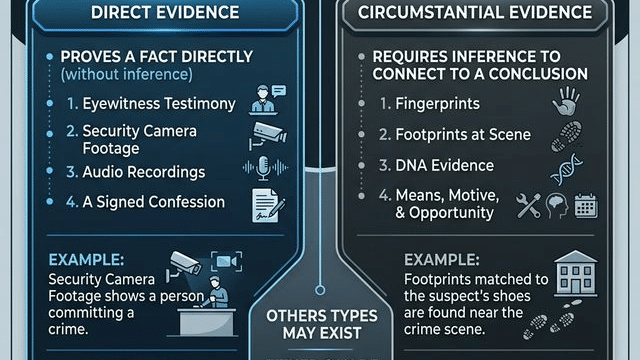
To meet that high burden of proof, prosecutors will use a combination of direct and circumstantial evidence. Many clients mistakenly believe that circumstantial evidence cannot be used to convict them. This is entirely false. Under Minnesota law, circumstantial evidence is given the exact same weight as direct evidence.
- Direct Evidence: This is evidence that directly proves a fact without requiring any inferences. Examples include high-definition security footage of a suspect committing a robbery, or a signed, recorded confession.
- Circumstantial Evidence: This is evidence that proves a fact, which then allows a jury to infer another fact. For example, if a witness testifies that they saw you running out of a bank with a ski mask and a bag of cash, that is circumstantial evidence that you robbed the bank. They did not see you inside robbing it, but the jury can reasonably infer that you did.
3. Can You Be Convicted Without Physical Evidence?
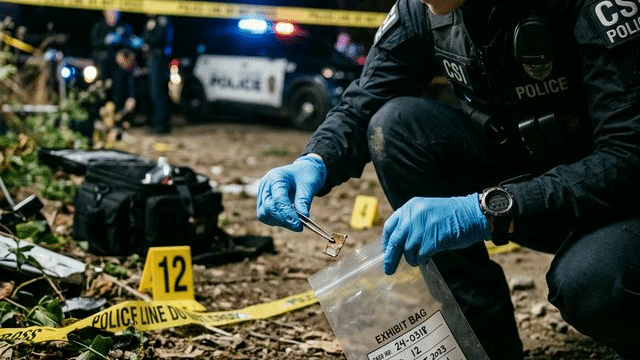
Yes. You absolutely can be convicted of a serious felony without a single piece of physical, tangible evidence (such as DNA, fingerprints, or a weapon).
In the eyes of the law, witness testimony is evidence. If an alleged victim takes the stand and testifies under oath that you assaulted them, that testimony alone – if believed by the jury – is legally sufficient to convict you of domestic assault. The jury does not need photographs of bruises or matching DNA to return a guilty verdict.
This is why having an aggressive defense attorney is so critical. If the state’s entire case rests on the word of a single witness, your attorney’s primary job is to destroy that witness’s credibility through relentless cross-examination, exposing their biases, shifting stories, and ulterior motives.
4. The Role of Corroborating Evidence
While witness testimony is legally enough, prosecutors know that juries are inherently skeptical of “he-said, she-said” situations. To secure a conviction, prosecutors always seek corroborating evidence to back up a witness’s story.
Corroborating evidence can include:
- Digital Footprints: Cell phone tower data showing your location, text messages, or deleted social media posts.
- Financial Records: Unexplained bank transfers or large cash deposits (common in narcotics trafficking cases).
- Prior Behavior: In certain restricted circumstances, prosecutors can introduce “Spreigl evidence” (evidence of prior bad acts) to establish a pattern of behavior.
How a Defense Attorney Dismantles the State’s Evidence
Because the burden of proof is so high, a defense attorney does not necessarily need to prove that you are innocent. They only need to insert a reasonable doubt into the minds of the jury regarding the state’s evidence. We achieve this by filing motions to suppress illegally obtained evidence, hiring independent forensic experts to challenge the state’s crime lab, and thoroughly investigating the backgrounds of the state’s witnesses.
Are you facing charges based on weak or circumstantial evidence? The Wolfgram Law Firm will aggressively scrutinize every piece of the prosecutor’s puzzle to protect your freedom. With a proven track record of securing acquittals in difficult cases, we know exactly how to demonstrate reasonable doubt to a Minnesota jury. Contact us today for a free, confidential consultation to discuss the evidence against you.
Our Reviews

Client
Testimonials
 Wolfgram Law Firm Criminal Defense

Canadian Pacific Plaza, 120 South 6th St UNIT 2305, Minneapolis
-
They are truly the **best law firm ever**. From the moment I reached out, I was impressed by their professionalism and dedication. Every member of their team is **highly skilled** and knowledgeable, ensuring that I received the best possible guidance throughout my case.
What stood out the most was their commitment to achieving **the best outcomes** for their clients. They took the time to explain every step of the process, making me feel confident and well-informed. I am nothing but happy with my … More decision to choose this law firm.
If you’re looking for a **high-quality legal team** that truly cares about their clients, look no further than Wolfgram Law Firm. Thank you for everything you’ve done for me!


Our Location
Canadian Pacific Plaza, 120 South 6th Street, Suite 2305, Minneapolis, Minnesota 55402, United States


Call Us
612-584-3675 Hours: 9am - 5pm | Monday - Friday