
Our Blog
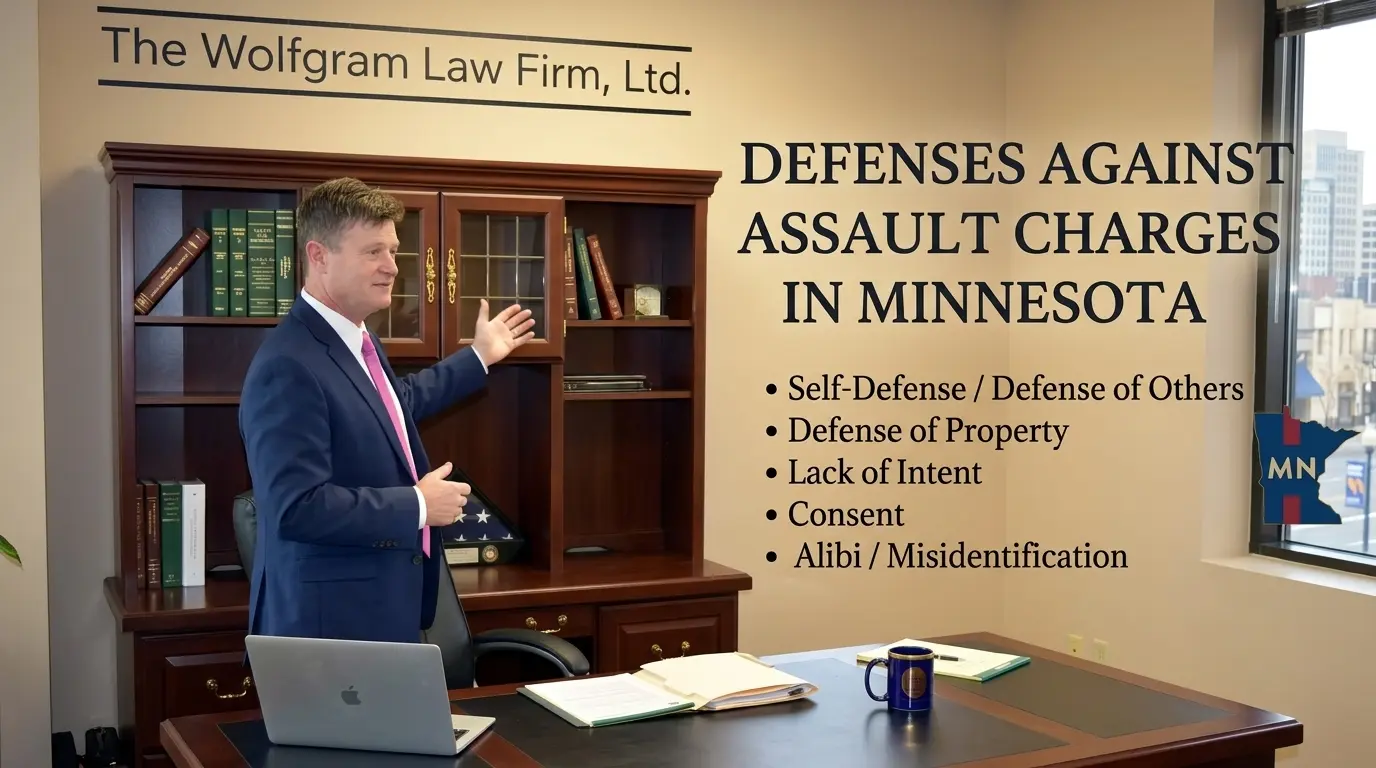
Defenses Against Assault Charges in Minnesota

Sep 22, 2026
Assault defenses Minnesota courts hear are rarely one clean story. Instead, they grow from gaps in the state’s proof.
Prosecutors must establish every element beyond a reasonable doubt. Therefore, your lawyer works backward from the charging language.
Intent, injury classification, identity, and justified force each become a separate battleground. Every one of them can shift your exposure.
At Wolfgram Law Firm, our Minnesota assault defense attorneys test those pressure points before any plea conversation begins.
Where Assault Defenses Minnesota Strategy Begins
Real strategy starts with the complaint, not the story you tell friends. Read what the state actually alleged. The charged degree tells you what a prosecutor must prove. Fifth-degree language differs sharply from second-degree language. Minnesota Statute 609.224 defines fifth-degree assault as a misdemeanor. It reaches an act done with intent to cause fear of immediate bodily harm or death. The same statute also reaches intentionally inflicting or attempting to inflict bodily harm. Those two theories demand different proof. Next comes the discovery list. Squad video, photographs, medical records, and recorded calls all deserve full review. Additionally, counsel should map each element to a specific piece of evidence. Weak links surface quickly during that exercise. Prior qualified domestic violence-related offenses can raise a fifth-degree charge within statutory timeframes. Consequently, your record belongs in the first conversation.Challenging Intent in Assault Defenses Minnesota Cases
Intent separates a crime from an accident. Many files stall right at that line. A shove inside a crowded hallway may lack the required intent. Contact alone does not prove a criminal purpose. Fear-based allegations raise their own question. The state must show you meant to cause fear of immediate harm. However, a frightened witness is not automatic proof. Their reaction and your purpose remain separate issues. Context often helps. Video showing a stumble, a reach, or a defensive block can reframe one second of movement. Timing evidence helps as well. A one-second gap between two moving people reads differently than a pursuit. Furthermore, medical episodes and reflexive motion can complicate the intent picture. Counsel may develop those facts through records or expert review.Disputing How the State Classified the Injury
Injury language drives the charged degree. Consequently, classification fights carry heavy consequences. Bodily harm sits at the bottom of that ladder. Substantial bodily harm and great bodily harm sit above it. Third-degree assault under Statute 609.223 requires substantial bodily harm. Exposure there may reach five years and a $10,000 fine. First-degree assault under Statute 609.221 requires great bodily harm. Exposure may reach twenty years and a $30,000 fine. Therefore, a bruise described as a fracture changes everything. Triage language and final findings sometimes diverge. Counsel may request complete records instead of a summary page. Imaging reports and follow-up notes often tell a different story. Additionally, older injuries can muddy the record. A shoulder that dislocated twice before deserves careful attention. Photographs taken days later often show more than the first report. Ask counsel how to preserve and date those images.Self-Defense and Defense of Others Under Statute 609.06
Minnesota law authorizes reasonable force in listed circumstances. Statute 609.06 sets out those situations. One listed circumstance covers any person resisting an offense against the person. Another covers a person aiding someone else who resists. Importantly, the statute applies when those circumstances exist. It also applies when the actor reasonably believes they exist. So the analysis examines your perception, not only the final result. Reasonableness still sets the outer limit. Defense of others appears often in family and workplace incidents. Witnesses may confirm that you stepped between two people. Furthermore, the statute bars deadly force against peace officers who announce their presence during official duties. Statute 609.065 governs the intentional taking of life instead. It reaches narrow situations involving great bodily harm, death, or a felony inside your abode. That narrow rule rarely fits an ordinary assault file. Nevertheless, counsel should confirm which standard actually applies.Identification and Witness Reliability Problems
Not every assault case includes a confident identification. Darkness, crowds, and brief contact all create doubt. Descriptions given minutes after an incident often stay vague. Height and clothing estimates shift between witnesses. Show-up identifications deserve close review. A single suspect presented in handcuffs carries suggestive weight. Furthermore, video can mislead. Compression artifacts and low light distort faces, logos, and clothing patterns. Alibi evidence may matter here. Phone location history, transit records, and card transactions can build a timeline. Counsel can also request the complete witness list. Sometimes the most helpful observer never reached the report. Cross-examination can expose those weaknesses. Small errors inside a description may raise reasonable doubt.Inconsistent Statements, 911 Audio, and Record Gaps
Early recordings freeze the first version of events. Later accounts often drift away from that version. A 911 call captures tone, background noise, and spontaneous detail. Those recordings sometimes contradict the written summary. Body camera audio adds another layer. On-scene comments may clash with a formal interview taken days afterward. Therefore, counsel compares every version side by side. Contradictions can weaken the state’s central witness at trial. Medical records create similar leverage. A reported injury with no matching treatment note raises a fair question. Written statements deserve the same attention. People often sign a summary that an officer drafted for them. Additionally, delayed care can undercut severity claims. Timing does not decide a case, yet it shapes negotiation.Dangerous Weapon Disputes in Second-Degree Cases
Second-degree allegations under Statute 609.222 depend on a dangerous weapon. Exposure may reach seven years and a $14,000 fine. When substantial bodily harm accompanies that weapon, exposure may reach ten years and a $20,000 fine. Consequently, the weapon label deserves scrutiny. Ordinary objects appear in these complaints regularly. How an object was used matters. A tool thrown across a garage differs from a tool held during an argument. Distance, force, and resulting injury all inform that analysis. Photographs of the object can support your position. Moreover, a disputed weapon element may pull a felony toward a lesser count. That shift can change the entire negotiation.Suppression Motions and Negotiated Outcomes
Some files include search, seizure, or custody problems. Those issues belong in an omnibus motion. Statements taken without proper warnings may face challenge. So may evidence gathered after an unlawful entry. Success depends entirely on the facts. A judge may suppress part of the evidence rather than all of it. Negotiation runs alongside motion practice. Prosecutors weigh proof strength when they consider reduced counts. For example, a third-degree count may resolve lower when injury proof weakens. Local practice in Hennepin, Ramsey, and Dakota counties can differ. Strong assault defenses Minnesota strategies pair credible motion work with realistic negotiation. No outcome is promised, yet leverage can improve. Court deadlines also move quickly in Minnesota criminal files. Missing an omnibus deadline can close a door permanently. Discuss employment, licensing, and immigration effects before signing anything. Our Minnesota criminal defense team raises those questions early.Talk With Wolfgram Law Firm About Assault Defenses Minnesota
Assault defenses Minnesota prosecutors respect are built early, not the week before trial. Evidence fades while the file sits. Video overwrites, witnesses move, and memories reshape themselves. Therefore, an early review protects your options. Wolfgram Law Firm offers a free consultation to people charged with assault in Minnesota. Reach us today through our contact page, and bring your complaint and any photos.Frequently Asked Questions
What are the most common assault defenses Minnesota lawyers raise? Lawyers usually examine intent first, then the injury level the state alleged. Identification, justified force, and evidence reliability often follow in the same review. Can self-defense get an assault charge dismissed in Minnesota? It may change the outcome when facts support reasonable force under Statute 609.06. Dismissal is never automatic, and the prosecutor still decides whether the charge proceeds. Does a weak injury claim reduce an assault charge? Sometimes. Injury classification separates fifth-degree, third-degree, and first-degree allegations. When medical proof does not support the alleged level, counsel may push for a lower count. This article is provided for informational purposes only and does not constitute legal advice. Every criminal case is unique. If you need legal advice regarding your specific situation, consult our experienced Minnesota criminal defense attorney.Our Reviews

Client
Testimonials
 Wolfgram Law Firm Criminal Defense

Canadian Pacific Plaza, 120 South 6th St Unit 2305, Minneapolis
-
Adam and his team here are outstanding and 100% will go the extra mile always staying in great communication.


Our Location
Canadian Pacific Plaza, 120 South 6th Street, Suite 2305, Minneapolis, Minnesota 55402, United States


Call Us
612-584-3675 Hours: 9am - 5pm | Monday - Friday