
Our Blog
What Is Drug Court in Minnesota?

Jul 28, 2026
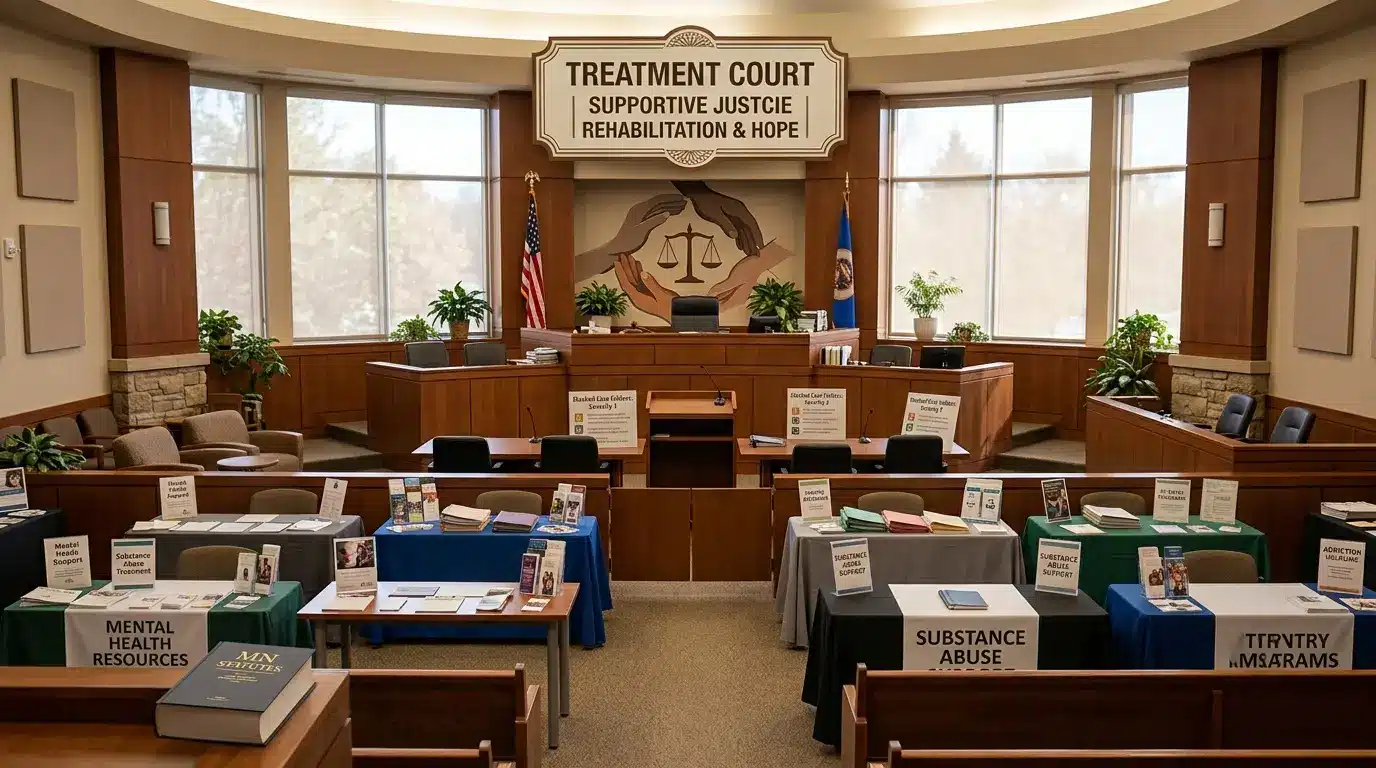
A Minnesota drug court program is a specialized treatment court that combines supervision, drug testing, and recovery services instead of traditional jail-focused sentencing. Successful participants may earn reduced charges, avoided jail time, or case dismissal depending on the program and county.
Drug court is not automatic — you must apply and be accepted. Furthermore, the program demands strict compliance with treatment and court orders.
At the Wolfgram Law Firm, our drug crimes defense attorneys help clients evaluate whether a Minnesota drug court program fits their case. This guide explains how drug court works statewide.
What Is a Minnesota Drug Court Program?
Minnesota drug courts — also called treatment courts — operate within the state court system. They target defendants whose criminal conduct stems primarily from substance use disorders. Instead of cycling through jail, participants enter structured treatment with regular court appearances. A team including a judge, prosecutor, defense counsel, and treatment providers monitors progress. Research shows treatment courts may reduce recidivism for eligible participants. However, the Minnesota drug court program model requires serious commitment and accountability.Who May Qualify for Drug Court
 Each county sets its own Minnesota drug court program rules. Common eligibility requirements include the following factors.
- Non-violent offense with a clear link to substance use
- Diagnosable substance use disorder or demonstrated need for treatment
- Legal residence in the county or willingness to transfer supervision
- No disqualifying violent felony history in some programs
- Willingness to enter intensive treatment and frequent testing
Phases of a Minnesota Drug Court Program
Most Minnesota drug court program tracks include multiple phases over 12 to 18 months. Each phase increases freedom as you meet milestones. Phase 1 — Stabilization: Intensive treatment, frequent court appearances, and random drug testing. Participants may attend daily or weekly counseling. Phase 2 — Active recovery: Reduced court frequency, employment or education requirements, and continued testing. Relapse triggers immediate sanctions. Phase 3 — Maintenance: Monthly court check-ins, peer support groups, and preparation for graduation. Successful completion may lead to charge reduction or dismissal.Rules and Sanctions in Drug Court
A Minnesota drug court program demands strict compliance. Participants must attend all treatment sessions, court dates, and testing appointments. Positive drug tests, missed appointments, or new arrests may trigger sanctions. Sanctions range from writing assignments and increased testing to short jail stays. Repeated violations may result in termination from the program and return to traditional prosecution. Therefore, drug court is demanding — not an easy way out.Benefits of Completing Drug Court
 Completing a Minnesota drug court program may offer life-changing benefits beyond avoiding jail.
- Case dismissal or reduction depending on plea agreement
- Structured path to sobriety with professional support
- Restored employment and housing opportunities without a felony record
- Connection to ongoing recovery resources and peer networks
- Judicial recognition of rehabilitation at graduation ceremonies
Drug Court vs. Standard Prosecution
Standard drug prosecution under Minnesota Statutes Chapter 152 may result in jail, felony records, and probation without treatment support. A Minnesota drug court program trades short-term convenience for long-term recovery investment. You will spend more time in court early on than with a simple plea. However, for many clients with substance use disorders, drug court offers the best path to avoiding a permanent criminal record and repeat arrests.How to Apply for Drug Court
Application usually begins through your defense attorney and the prosecutor after charges are filed. Early application — before plea — improves acceptance chances. You may need a substance use assessment, background review, and interview with the drug court team. Some programs require a guilty plea with a stay of adjudication or imposition. Never apply without legal advice. A poorly timed plea may eliminate drug court eligibility or better defense options.Is Drug Court Right for You?
 A Minnesota drug court program suits defendants ready for intensive treatment — not those seeking a quick dismissal without effort.
At Wolfgram Law Firm, we evaluate whether drug court, diversion, or trial offers the best outcome for your case. Contact us today for a free and confidential consultation.
Our Minnesota criminal defense team knows local drug court requirements across the Twin Cities metro.
A Minnesota drug court program suits defendants ready for intensive treatment — not those seeking a quick dismissal without effort.
At Wolfgram Law Firm, we evaluate whether drug court, diversion, or trial offers the best outcome for your case. Contact us today for a free and confidential consultation.
Our Minnesota criminal defense team knows local drug court requirements across the Twin Cities metro.
Frequently Asked Questions
Does drug court dismiss charges in Minnesota? Many Minnesota drug court programs offer dismissal or expungement after successful graduation. The exact outcome depends on your plea agreement and county policy. Some programs use a stay of adjudication where the conviction never enters if you complete all phases. How long does Minnesota drug court last? Most programs run 12 to 18 months across three or four phases. Duration depends on compliance, treatment progress, and local court rules. Relapses may extend your timeline or result in sanctions that delay graduation. Can felony drug charges go to drug court? Some counties accept certain felony possession charges into drug court. Serious trafficking or violent felony cases are often excluded. Your attorney should review the specific Minnesota drug court program rules in the county where your case is filed. This article is provided for informational purposes only and does not constitute legal advice. Every criminal case is unique. If you need legal advice regarding your specific situation, consult our experienced Minnesota criminal defense attorney.Our Reviews

Client
Testimonials
 Wolfgram Law Firm Criminal Defense

Canadian Pacific Plaza, 120 South 6th St Unit 2305, Minneapolis
-
Adam and his team here are outstanding and 100% will go the extra mile always staying in great communication.


Our Location
Canadian Pacific Plaza, 120 South 6th Street, Suite 2305, Minneapolis, Minnesota 55402, United States


Call Us
612-584-3675 Hours: 9am - 5pm | Monday - Friday