
Our Blog
What Happens If You Violate Probation in Minnesota?
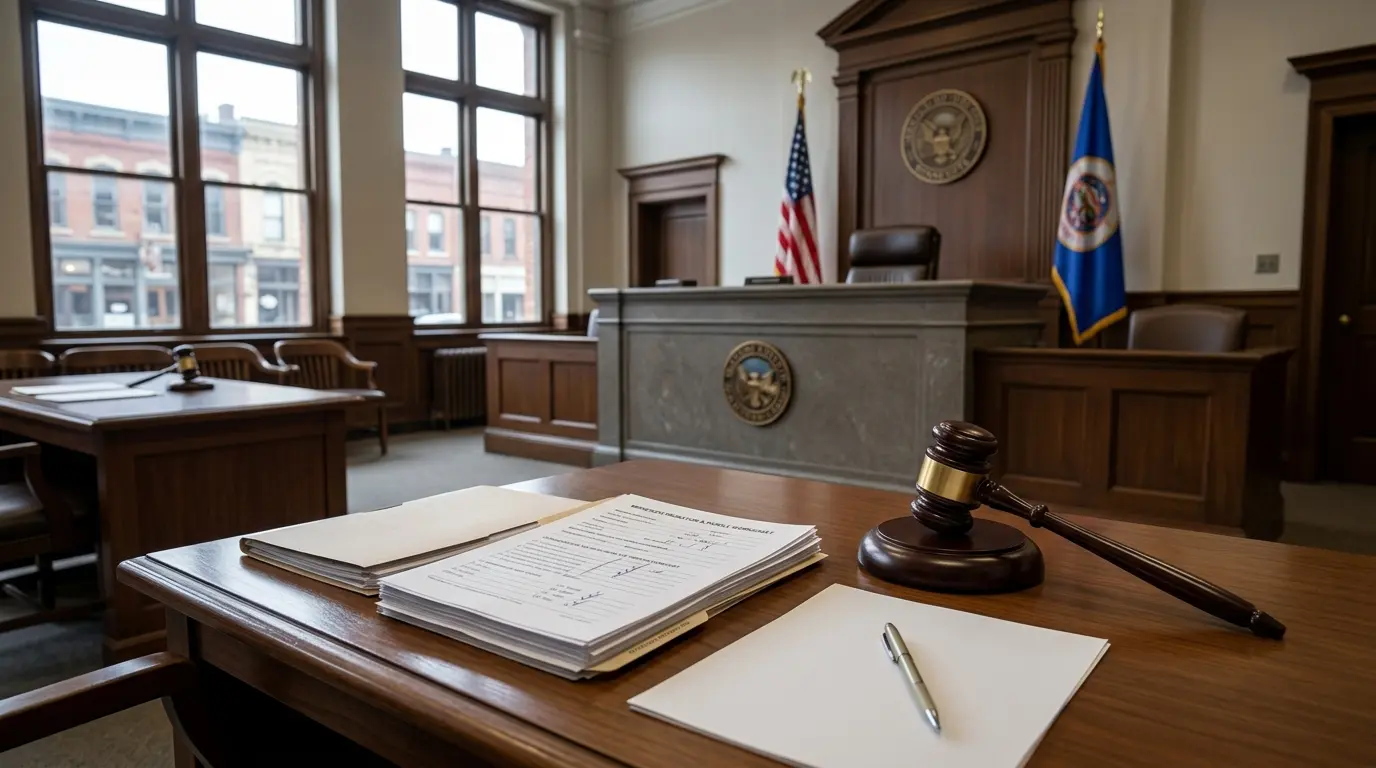
 Probation violation Minnesota cases arise when someone on supervised release fails to follow court-ordered conditions. A missed drug test, new arrest, or skipped meeting with a probation officer can trigger a formal violation report and a return to court.
Unlike a new criminal trial, a probation violation hearing often focuses on whether you broke specific rules — not whether you committed the original offense again. Furthermore, the consequences may include jail, extended probation, or execution of a stayed prison sentence.
At the Wolfgram Law Firm, our Minnesota criminal defense attorneys represent clients facing probation revocation across Minneapolis, St. Paul, and Hennepin County. This guide explains how a probation violation Minnesota case works and what you may face if accused.
Probation violation Minnesota cases arise when someone on supervised release fails to follow court-ordered conditions. A missed drug test, new arrest, or skipped meeting with a probation officer can trigger a formal violation report and a return to court.
Unlike a new criminal trial, a probation violation hearing often focuses on whether you broke specific rules — not whether you committed the original offense again. Furthermore, the consequences may include jail, extended probation, or execution of a stayed prison sentence.
At the Wolfgram Law Firm, our Minnesota criminal defense attorneys represent clients facing probation revocation across Minneapolis, St. Paul, and Hennepin County. This guide explains how a probation violation Minnesota case works and what you may face if accused.
Probation Violation Minnesota: The Legal Framework
Probation in Minnesota is governed primarily by Minnesota Statute 609.14. Courts may place a defendant on probation as part of a sentence, often with a stayed jail or prison term hanging over the case. While on probation, you must comply with conditions set by the judge and monitored by your probation officer. These conditions may include regular reporting, drug testing, employment requirements, restitution payments, and avoiding new criminal conduct. Additionally, Minnesota uses both standard probation and supervised release depending on the offense and sentence structure. Therefore, the exact rules and revocation process may vary based on your underlying conviction and sentencing order.How a Probation Violation Gets Reported
 Most probation violation Minnesota cases begin when a probation officer files a violation report with the court. The report describes the alleged breach — such as a positive drug screen, failure to appear, or contact with prohibited persons.
The officer may recommend sanctions ranging from increased supervision to full revocation. However, the judge — not the probation officer — ultimately decides what happens at a violation hearing.
Consequently, early communication with your attorney before the hearing date may help shape the record and explore alternatives to jail.
Most probation violation Minnesota cases begin when a probation officer files a violation report with the court. The report describes the alleged breach — such as a positive drug screen, failure to appear, or contact with prohibited persons.
The officer may recommend sanctions ranging from increased supervision to full revocation. However, the judge — not the probation officer — ultimately decides what happens at a violation hearing.
Consequently, early communication with your attorney before the hearing date may help shape the record and explore alternatives to jail.
Common Conditions That Lead to Violations
Every probation order is different, but several conditions appear frequently in Minnesota cases.- Reporting to a probation officer on a set schedule
- Submitting to random drug and alcohol testing
- Completing chemical dependency or mental health treatment
- Paying fines, restitution, and supervision fees
- Avoiding contact with victims or co-defendants
- Not possessing firearms or controlled substances
- Not leaving Minnesota without written permission
- Obeying all laws — including no new arrests or charges
What Happens at a Probation Violation Hearing
After a violation report is filed, the court typically schedules a hearing. You may receive a summons or be taken into custody depending on the severity of the alleged breach and your history. At the hearing, the prosecution must prove the violation by a preponderance of the evidence — a lower standard than beyond a reasonable doubt. This means the judge must find it more likely than not that you violated a condition. Therefore, factual disputes over drug test results, scheduling conflicts, or misunderstandings with your officer may become central issues at the hearing.Possible Consequences of a Probation Violation Minnesota Case
 If the court finds a violation, several outcomes are possible under Minnesota law.
- Continued probation with the same or modified conditions
- Extended probation with additional requirements or monitoring
- Short jail sanction as a condition of continued release
- Execution of a stayed sentence — meaning you serve the original jail or prison time
- Imposition of a new sentence within the original statutory limits
Stayed Sentences and Why They Matter
Many Minnesota sentences include a stayed incarceration term. You remain free on probation as long as you follow the rules. However, a probation violation Minnesota finding may allow the court to revoke that stay and send you to jail or prison. For example, a defendant sentenced to 36 months in prison with all but 12 months stayed faces significant exposure if probation is revoked. The court may execute part or all of the stayed time. Additionally, some offenses carry mandatory minimums that limit how much time a judge can stay. Your attorney should review the original sentencing order carefully to calculate real exposure.Defenses and Mitigation Strategies
Not every violation report results in revocation. Common defense and mitigation themes include challenging the accuracy of drug tests, proving compliance with treatment, documenting employment progress, and showing the violation was unintentional or de minimis. Your lawyer may also negotiate with the prosecutor or probation officer before the hearing. Sometimes parties agree to modified conditions, additional treatment, or a brief jail sanction instead of full revocation. Furthermore, procedural issues — such as failure to provide adequate notice or lack of evidence supporting the alleged breach — may affect the outcome.Your Rights When Facing a Probation Violation
You have the right to an attorney, a hearing, and to present evidence and witnesses. You may cross-examine the probation officer and challenge documents in the violation report. However, you do not have the same full trial rights as in a new criminal case. There is no right to a jury in most Minnesota probation violation proceedings, and the burden of proof is lower for the state. Contact a Minnesota criminal defense attorney as soon as you learn a violation has been filed. Early action may preserve options that disappear after a revocation order.Get Legal Help for a Probation Violation Minnesota Case
 A probation violation Minnesota case can threaten your freedom, employment, and family stability within days. The difference between continued probation and a executed stayed sentence may hinge on how quickly you respond.
At Wolfgram Law Firm, we analyze violation reports, challenge unreliable evidence, and advocate for alternatives to incarceration. Contact us today for a free and confidential consultation before your next hearing date.
A probation violation Minnesota case can threaten your freedom, employment, and family stability within days. The difference between continued probation and a executed stayed sentence may hinge on how quickly you respond.
At Wolfgram Law Firm, we analyze violation reports, challenge unreliable evidence, and advocate for alternatives to incarceration. Contact us today for a free and confidential consultation before your next hearing date.
Frequently Asked Questions
What is a probation violation in Minnesota? A probation violation occurs when someone on court-ordered supervision fails to follow a condition of probation. Common examples include missing appointments, failing drug tests, or picking up new criminal charges. The probation officer reports the alleged breach to the court, which may schedule a violation hearing under Statute 609.14. Can you go to jail for violating probation in Minnesota? Yes. A judge may impose jail time as a sanction or execute a previously stayed sentence after finding a violation. The severity depends on the underlying offense, the nature of the breach, and your compliance history. Some violations result in modified conditions rather than incarceration, especially for first-time or technical breaches. How is guilt proven in a probation violation hearing? The state must prove the violation by a preponderance of the evidence — meaning it is more likely than not that you broke a probation condition. This is a lower standard than the beyond-a-reasonable-doubt threshold used at trial. You may present evidence, call witnesses, and cross-examine the probation officer at the hearing. This article is provided for informational purposes only and does not constitute legal advice. Every criminal case is unique. If you need legal advice regarding your specific situation, consult our experienced Minnesota criminal defense attorney.Our Reviews

Client
Testimonials
 Wolfgram Law Firm Criminal Defense

Canadian Pacific Plaza, 120 South 6th St Unit 2305, Minneapolis
-
Adam and his team here are outstanding and 100% will go the extra mile always staying in great communication.


Our Location
Canadian Pacific Plaza, 120 South 6th Street, Suite 2305, Minneapolis, Minnesota 55402, United States


Call Us
612-584-3675 Hours: 9am - 5pm | Monday - Friday