
Our Blog
What Is the Difference Between a Felony and Misdemeanor in Minnesota?


If you or a loved one have recently been charged with a crime, reading the official criminal complaint can feel like trying to decipher a foreign language. One of the most confusing and anxiety-inducing elements is the classification of your crime. You need to know: What is the difference between a felony and a misdemeanor in Minnesota? Which one means jail time, and which one will ruin your career?
In the Minnesota criminal justice system, crimes are generally divided into four distinct categories: petty misdemeanors, misdemeanors, gross misdemeanors, and felonies. The category dictates not only the maximum potential penalty, but also how the court process will unfold. Below is an aggressive, clear breakdown of how these charges differ and why you need a skilled criminal defense lawyer to navigate them.
1. Petty Misdemeanors: Not Technically a “Crime”
Under Minnesota law (Statute 609.02), a petty misdemeanor is essentially the lowest level offense you can commit. In fact, Minnesota does not even officially classify a petty misdemeanor as a “crime.”
The Penalties: A petty misdemeanor does not carry the possibility of jail time. The maximum penalty is typically a fine of up to $300. Common examples include minor traffic violations (like speeding tickets) or possessing a very small amount of certain controlled substances.
While avoiding jail time is an obvious relief, paying a petty misdemeanor fine operates as a guilty plea, which goes on your driving or public record and can sometimes affect insurance rates. Still, the long-term impact is minimal compared to true criminal convictions.
2. Standard Misdemeanors in Minnesota
A standard misdemeanor is where genuine criminal liability begins. A conviction for a misdemeanor will result in a permanent criminal record, which will appear on standard background checks conducted by employers, landlords, and licensing boards.
The Penalties: In Minnesota, a standard misdemeanor is punishable by up to 90 days in local county jail and/or a maximum fine of $1,000.
Common examples of misdemeanor crimes include:
- First-time DWI/DUI offenders (with a blood alcohol content under 0.16)
- Simple assault
- Minor theft or shoplifting (usually under $500 in value)
- Disorderly conduct
Even though this is the lowest tier of actual crimes, the collateral consequences – such as losing a job because of a suddenly “dirty” record – are severe. A defense attorney can often negotiate a “Stay of Adjudication,” a legal maneuver where you complete probation and the misdemeanor is totally dismissed from your record.
3. Gross Misdemeanors: The Stepping Stone to Felonies
A gross misdemeanor represents the intermediate space between a minor crime and a life-changing felony. These crimes are taken very seriously by Minnesota prosecutors and local judges.
The Penalties: A gross misdemeanor conviction is punishable by up to one full year (364 days) in local jail and/or a fine of up to $3,000.
Common examples of gross misdemeanors include:
- Second-time DWI offenses or first-time DWIs with aggravating factors (like a BAC over 0.16)
- Certain types of domestic assault
- Repeated theft offenses or theft of property valued between $500 and $1,000
Because the stakes are significantly higher, the court process for a gross misdemeanor mirrors a felony case. You are entitled to an Omnibus hearing where your legal team can challenge the constitutionality of the state’s evidence before trial.
4. Felonies: The Most Severe Crimes in Minnesota
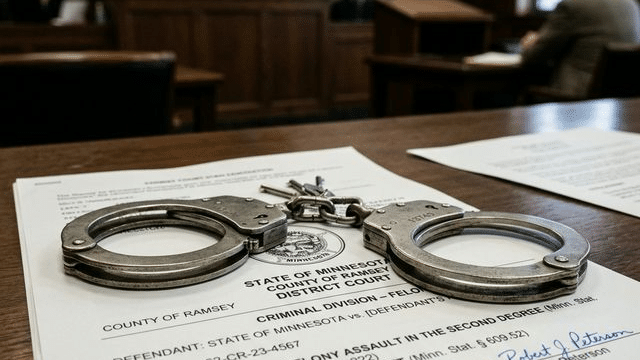
A felony is the most serious classification of crime in Minnesota. A felony conviction brings catastrophic consequences that extend far beyond the courtroom, including the permanent loss of certain civil rights (like the right to vote or own a firearm) and tremendous barriers to employment.
The Penalties: By legal definition, a felony is any crime punishable by more than one year in a state prison. Unlike misdemeanors, where sentences are served in local county jails, felony sentences often result in transfers to state-run penitentiaries. Fines for felonies can stretch into tens of thousands of dollars.
Common examples of felony offenses in Minnesota include:
- First-degree assault
- Murder and manslaughter
- Distribution or manufacture of illegal drug offenses
- Sexual assault and serious sex offenses
- Aggravated robbery, kidnapping, or arson
Because of the massive consequences involved, the state pours immense resources into prosecuting felonies. You need an aggressive defense strategy consisting of private investigators, forensic experts, and relentless motion practice to fight the state’s evidence.
Summary: Misdemeanor vs. Felony Court Processes
Beyond the penalties themselves, the primary difference between a felony and a misdemeanor is how the state handles your case. Misdemeanor cases move rapidly. In many instances, an attorney can appear on your behalf, and the plea process happens at the first court date. Felonies are slow, highly bureaucratic processes involving strict bail conditions, Grand Jury indictments, rigorous Omnibus Hearings, and intense discovery reviews over the course of many months.
Do Not Let A Charge Define Your Future

Whether you have been slapped with a “simple” misdemeanor or indicted for a major felony, every single charge carries weight. Prosecutors frequently overcharge defendants, threatening them with felonies to strong-arm a guilty plea for a gross misdemeanor. Do not fall victim to their tactics. You have the right to challenge their evidence, their witnesses, and their timeline. Contact the Wolfgram Law Firm today to protect your freedom and secure a tireless defense for your future.
Our Reviews

Client
Testimonials
 Wolfgram Law Firm Criminal Defense

Canadian Pacific Plaza, 120 South 6th St UNIT 2305, Minneapolis
-
They are truly the **best law firm ever**. From the moment I reached out, I was impressed by their professionalism and dedication. Every member of their team is **highly skilled** and knowledgeable, ensuring that I received the best possible guidance throughout my case.
What stood out the most was their commitment to achieving **the best outcomes** for their clients. They took the time to explain every step of the process, making me feel confident and well-informed. I am nothing but happy with my … More decision to choose this law firm.
If you’re looking for a **high-quality legal team** that truly cares about their clients, look no further than Wolfgram Law Firm. Thank you for everything you’ve done for me!


Our Location
Canadian Pacific Plaza, 120 South 6th Street, Suite 2305, Minneapolis, Minnesota 55402, United States


Call Us
612-584-3675 Hours: 9am - 5pm | Monday - Friday