
Our Blog
What Is Possession of Child Pornography Under Minnesota Law?

Child pornography Minnesota law under Statute 617.246 criminalizes possessing, distributing, and producing visual depictions of minors engaged in sexual conduct. Charges may arise from files on phones, computers, cloud accounts, or shared drives — even when the accused did not create the images.
Federal prosecution may run parallel to state charges in many investigations. Furthermore, conviction typically requires lifetime registration as a predatory offender under Statute 243.166.
At the Wolfgram Law Firm, our Minnesota criminal defense attorneys handle complex digital forensics cases across the Twin Cities. This guide explains what child pornography Minnesota law prohibits and how charges may arise.
Child Pornography Minnesota Law: Statutory Framework
Minnesota Statute 617.246 defines child pornography as visual depictions involving minors engaged in sexual conduct or lewd display. The statute covers possession, dissemination, and production with separate penalty subsections.
A minor is defined as a person under 18 for purposes of this chapter. Additionally, the statute may apply to digital images, videos, and altered depictions that appear to involve minors.
Importantly, knowing possession is a required element — the state must prove the accused knowingly accessed or retained the material. Therefore, forensic evidence about how files arrived on a device may become central to the defense.
Possession vs. Distribution vs. Production

Possession of child pornography — retaining images on a device or account — may be charged as a felony with significant prison exposure. Each image may potentially support a separate count depending on charging decisions.
Dissemination involves sharing, uploading, or transmitting images to others and generally carries harsher penalties than possession alone. Production — creating new depictions — is among the most serious offenses under child pornography Minnesota law.
Peer-to-peer file sharing programs may lead to both possession and distribution charges simultaneously. Consequently, a single investigation may produce dozens of felony counts.
How Investigations Begin and Unfold
Investigations often start with tips from internet service providers, social media platforms, or the National Center for Missing and Exploited Children. Federal and state task forces may then obtain IP addresses and search warrants for devices.
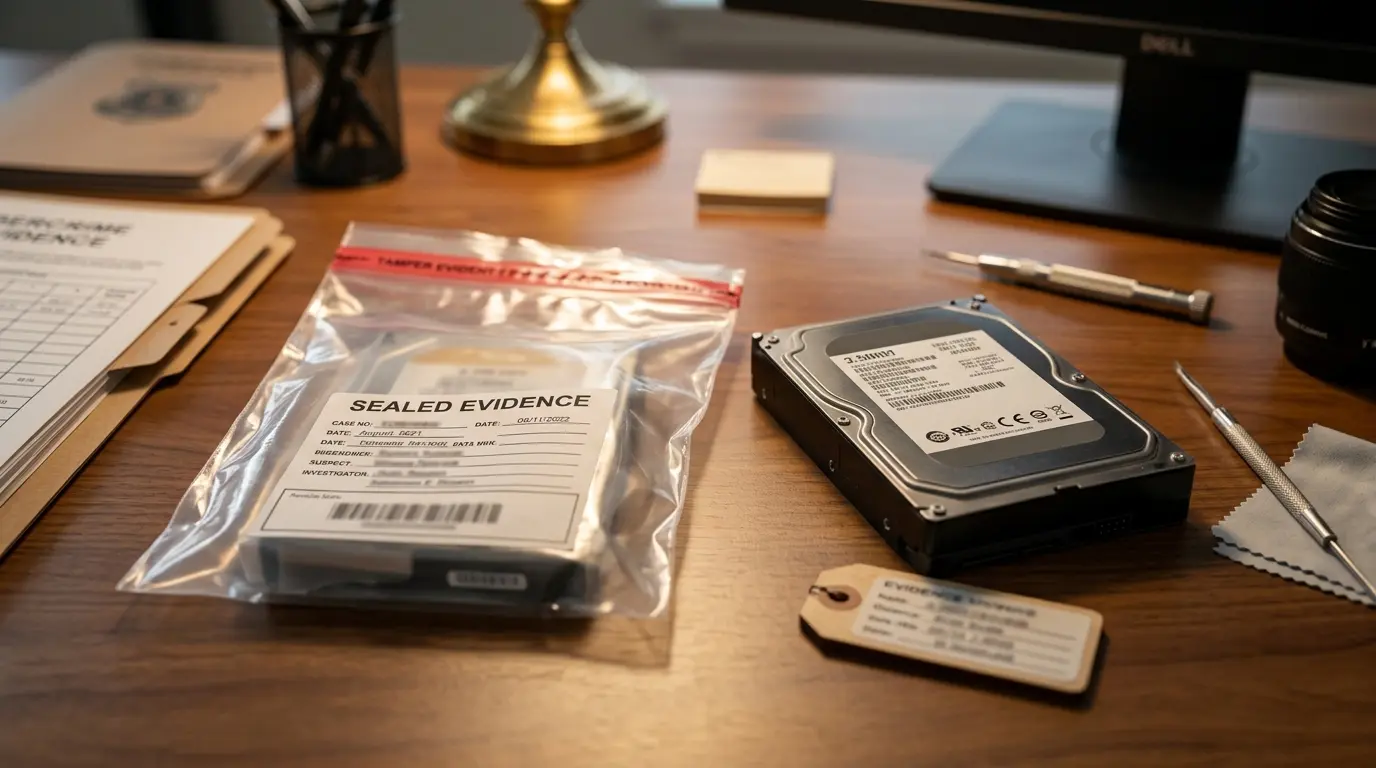
Forensic examiners create detailed reports cataloging every image and file path on seized devices. Additionally, deleted files may be recovered and used as evidence of knowing possession.
Defendants may not learn of the investigation until agents execute a search warrant at their home. Therefore, understanding your rights during a search is critical from the first moment.
What Prosecutors Must Prove
The state must prove the depicted person was a minor and that the visual material meets the statutory definition of sexual conduct or lewd display. Expert testimony may establish age based on image analysis when identity is unknown.
Prosecutors must also prove knowing possession or dissemination — not accidental download or malware placement. However, file location, search history, and access timestamps may be used to infer knowledge.
An experienced sex crime defense attorney may challenge forensic methodology, chain of custody, and whether files were accessible to the accused.
Penalties Under Child Pornography Minnesota Law

Felony penalties vary by subsection but may include lengthy prison sentences, especially for distribution and production. Multiple counts may result in consecutive sentences that substantially increase total exposure.
Conviction typically requires lifetime predatory offender registration under Statute 243.166. Furthermore, federal sentences under 18 U.S.C. § 2252 may exceed state penalties in cases prosecuted in both systems.
Collateral consequences include employment barriers, loss of professional licenses, and immigration consequences for non-citizens. Consequently, the total impact of conviction extends far beyond incarceration.
Common Defense Issues in Digital Cases
Defense teams may challenge whether the accused knowingly possessed the files or whether automated programs downloaded them without user action. Additionally, multiple users sharing a household device may create attribution problems.
Search warrant affidavits may be challenged if they lacked probable cause for the device seizure. Furthermore, forensic examiners may make errors in file identification or hash comparison that affect the case.
Child pornography Minnesota law cases are technically complex and require attorneys familiar with digital evidence standards. Early retention of a forensic expert may be essential.
Your Rights During a Search or Investigation
You may decline to speak with agents without an attorney present. Additionally, do not consent to additional searches beyond what a warrant authorizes without legal advice.
Do not delete files or destroy devices once an investigation begins — that conduct may result in separate obstruction charges. However, preserve evidence that supports innocent explanations for file presence.
Contact counsel immediately if your devices are seized or if you receive a target letter from federal or state authorities. Early intervention may protect critical defense options.
Get Legal Help for Child Pornography Charges

Child pornography Minnesota law cases carry some of the harshest penalties in the criminal justice system. Digital evidence may seem overwhelming, but forensic and legal challenges may still apply.
At Wolfgram Law Firm, we analyze forensic reports, challenge unlawful searches, and negotiate strategically in sensitive cases. Contact us today for a free and confidential consultation before your next court date.
Frequently Asked Questions
Is accidentally downloading child pornography a crime?
Statute 617.246 requires knowing possession or dissemination. Accidental or automated downloads without knowledge may not meet the statutory intent element, though prosecutors may infer knowledge from file location and access patterns.
An attorney may present forensic evidence supporting an innocent explanation for file presence.
Can each image be a separate charge?
Prosecutors may charge multiple counts based on the number of images or videos involved. Total exposure may increase significantly when many files are cataloged in a forensic report.
Your attorney may negotiate count reductions or challenge duplicative charging in some circumstances.
Does deleting files before a search prevent charges?
Forensic tools may recover deleted files, and deletion after learning of an investigation may support obstruction charges. Additionally, recovered deleted files may still be used as evidence of prior knowing possession.
Do not alter devices or accounts once you suspect an investigation is underway.
This article is provided for informational purposes only and does not constitute legal advice. Every criminal case is unique. If you need legal advice regarding your specific situation, consult our experienced Minnesota criminal defense attorney.
Our Reviews

Client
Testimonials
 Wolfgram Law Firm Criminal Defense

Canadian Pacific Plaza, 120 South 6th St Unit 2305, Minneapolis
-
Adam and his team here are outstanding and 100% will go the extra mile always staying in great communication.


Our Location
Canadian Pacific Plaza, 120 South 6th Street, Suite 2305, Minneapolis, Minnesota 55402, United States


Call Us
612-584-3675 Hours: 9am - 5pm | Monday - Friday